Lower back pain can be frustrating on its own. When it occurs alongside constipation, it may be difficult to tell whether the discomfort is coming from the digestive system, the back, or a combination of both. You may notice a dull ache, pressure, stiffness, or soreness that becomes more noticeable when you feel bloated, sit for long periods, or strain during a bowel movement.
If constipation is contributing to your discomfort, improving your bowel movements may also reduce the pressure and soreness associated with it. Gradually increasing dietary fiber, drinking adequate fluids, staying gently active, responding to the urge to have a bowel movement, and avoiding excessive straining can help with uncomplicated constipation.
However, constipation is not the only possible explanation for lower back pain. Muscle strain, spinal problems, kidney or urinary conditions, and abdominal or pelvic problems can cause similar symptoms. Understanding the likely connection—and recognizing when the symptoms need medical evaluation—is important.
Can Constipation Cause Lower Back Pain?
Yes, constipation can sometimes contribute to lower back discomfort. When stool accumulates in the bowel, it can cause abdominal fullness, bloating, and pressure. Repeated straining during difficult bowel movements may also irritate or fatigue the muscles around the abdomen, pelvis, and lower back.
The relationship is not always direct, however. Having constipation and back pain at the same time does not automatically mean constipation is causing the back pain. If you want to understand the relationship in more detail, see our guide to how constipation can cause back pain.
Several factors may explain why constipation and lower back discomfort occur together.
Stool Buildup and Pressure
When stool remains in the bowel, the bowel can become distended. This may create pressure or discomfort in the abdomen and pelvis. Some people may perceive this discomfort farther back toward the lower back.
Bloating and Gas
Constipation commonly occurs with bloating and gas. Increased abdominal pressure can make an existing back ache feel more noticeable. Some people notice that the discomfort changes after passing gas or having a bowel movement.
Repeated Straining
Trying repeatedly to pass hard stool can place additional stress on the abdominal, pelvic, and lower-back muscles. If you have spent several days straining, muscular soreness may continue even after the bowel movement problem improves.
Reduced Physical Activity
Constipation can leave you feeling uncomfortable and sluggish, which may cause you to sit or lie down more than usual. Prolonged inactivity can contribute to stiffness and may aggravate existing lower back pain.
How to Relieve Lower Back Pain From Constipation
The most useful approach is usually to address the constipation while avoiding activities that make your back symptoms worse.
1. Increase Fiber Gradually
Dietary fiber helps add bulk to stool and can support easier bowel movements. Good sources include fruits, vegetables, whole grains, beans, lentils, nuts, and seeds.
If your current diet is low in fiber, increase your intake gradually. A sudden large increase can cause additional gas and bloating.
Try to:
- Add oatmeal, fruit, or another fiber-containing food to breakfast.
- Include vegetables with lunch and dinner.
- Replace some refined grains with whole-grain bread or brown rice.
- Add beans or lentils to meals.
- Include nuts or seeds as part of meals or snacks.
- Increase fiber progressively rather than making a sudden dramatic change.
2. Drink Adequate Fluids
Adequate fluid intake supports softer stools and can be particularly important when you increase your fiber intake.
Your fluid needs vary according to factors such as activity level, climate, diet, and overall health. If a healthcare professional has advised you to restrict fluids, follow that advice rather than deliberately increasing your intake.
3. Walk and Stay Gently Active
Gentle physical activity can support normal bowel function while reducing stiffness associated with prolonged sitting.
You do not necessarily need strenuous exercise. A comfortable walk may be a practical option when constipation is making you feel sluggish.
If walking significantly increases your back pain, stop rather than pushing through worsening symptoms.
4. Respond to the Urge to Have a Bowel Movement
When you feel the need to have a bowel movement, try not to repeatedly postpone it.
Ignoring the urge regularly may make bowel habits more difficult for some people. Instead, give yourself enough time to use the bathroom without rushing or forcing the stool to pass.
5. Improve Your Toilet Position
Your position on the toilet can affect how comfortably you pass stool.
Placing your feet on a small footstool raises the knees and may help you maintain a more comfortable position while relaxing the pelvic muscles.
Avoid spending long periods sitting on the toilet, particularly if you are repeatedly trying to force a bowel movement.
6. Avoid Excessive Straining
Repeated forceful straining can increase soreness around the lower back and pelvis.
If stool will not pass comfortably, stop rather than continuing to push. Trying again later after allowing your body to relax may be more appropriate than prolonged straining.
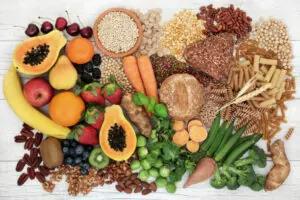
Foods That May Help Relieve Constipation
Your regular diet plays an important role in maintaining bowel regularity.
High-Fiber Foods
Useful options include:
- Oatmeal
- Apples and pears
- Berries
- Oranges
- Broccoli
- Carrots
- Peas
- Leafy green vegetables
- Beans
- Lentils
- Whole grains
- Nuts
- Seeds
If you currently eat very little fiber, increase it gradually to reduce the chance of worsening gas or bloating.
Foods to Limit When Constipated
You do not necessarily need to completely eliminate specific foods. However, a diet dominated by highly processed, low-fiber foods can make it harder to obtain enough dietary fiber.
Examples include:
- Chips and similar snack foods
- Some fast-food meals
- Highly processed packaged foods
- Some prepared meals that contain little fiber
Rather than focusing only on foods to avoid, try replacing some low-fiber choices with vegetables, fruits, whole grains, beans, lentils, nuts, and seeds.
Can Gentle Stretching Help?
Gentle movement may help if your lower-back discomfort is partly related to muscular stiffness or soreness after straining.
Stretching itself does not treat constipation. The goal is simply to keep the back moving comfortably while you address the bowel problem.
Avoid aggressive twisting, deep forward bending, or any movement that causes sharp or significantly worsening pain.
If your back pain has no obvious connection to constipation, learning more about common causes of back pain may help you understand why other explanations need to be considered.
Can Heat Help Lower Back Pain From Constipation?
A warm compress may temporarily make muscular lower-back soreness feel more comfortable.
Use a comfortably warm temperature and avoid placing anything extremely hot directly against the skin.
Heat does not treat constipation itself. If constipation is contributing to your symptoms, improving bowel function remains the more important step.
Should You Take a Laxative?
A laxative may be appropriate in some situations when dietary and lifestyle measures are not enough. Different laxatives work in different ways, so the appropriate choice depends on the person’s circumstances.
A pharmacist or healthcare professional can help determine whether a laxative is suitable and which type may be appropriate.
Avoid repeatedly relying on laxatives without addressing persistent or recurring constipation. If you frequently need medication to have bowel movements, the underlying cause should be evaluated.
How Long Does Constipation-Related Lower Back Pain Last?
There is no single recovery time for constipation-related back discomfort.
If constipation is contributing to the symptoms, discomfort may improve as bowel movements return to normal. However, muscular soreness caused by repeated straining may take longer to settle.
One useful clue is what happens after the constipation improves.
If your bowel movements return to normal but the lower back pain continues, the back pain may have another cause.
Persistent symptoms should not automatically be attributed to constipation. The broader category of back pain and its possible causes includes problems involving muscles, joints, discs, nerves, and other structures.
How to Tell Whether Constipation Is Causing Your Back Pain
Look at the overall pattern rather than relying on one symptom.
Signs That May Suggest a Connection
- The symptoms started around the same time: Constipation and back discomfort appeared during the same period.
- You feel bloated: Abdominal fullness occurs along with the back discomfort.
- You have been straining: Your back became sore after repeated difficult bowel movements.
- Passing stool helps: Pressure or discomfort decreases after a bowel movement.
- There was no obvious back injury: The discomfort did not begin after lifting, falling, exercising, or another physical event.
These features can suggest that constipation is contributing to the discomfort, but they cannot prove the cause.
When Lower Back Pain May Not Be From Constipation
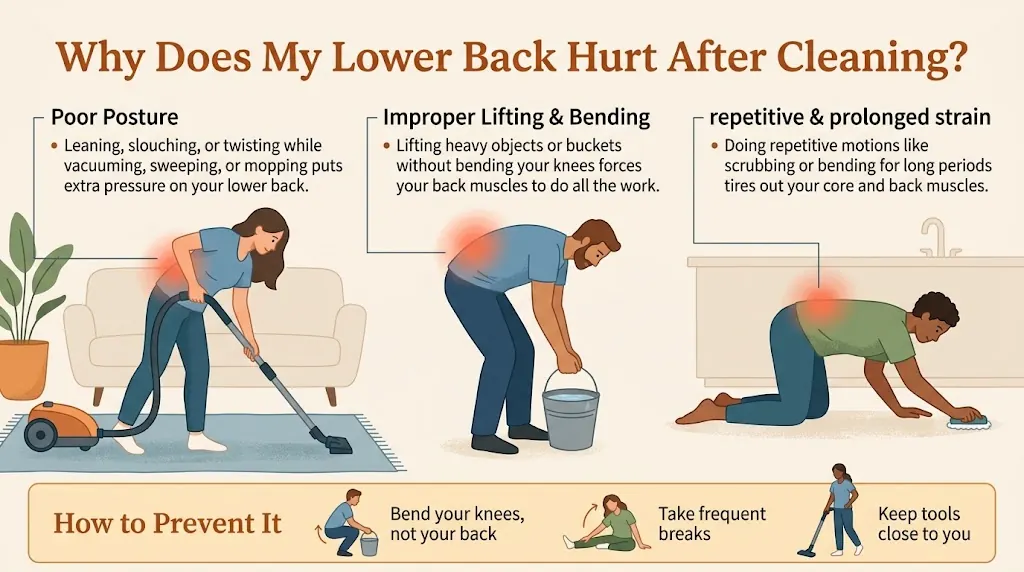
It is easy to assume that constipation explains the back pain when both symptoms occur together. However, lower back pain has many possible causes.
Consider another explanation if:
- The pain began after lifting something heavy.
- The pain followed a fall or other injury.
- The pain continues after constipation resolves.
- The pain is severe or rapidly worsening.
- You have significant pain on one side of your back.
- You have urinary symptoms.
- You develop numbness or weakness.
- You have fever or severe abdominal pain.
- The pain becomes noticeably worse when breathing.
Pain that occurs with breathing can have causes unrelated to constipation, particularly when it is accompanied by chest symptoms or significant shortness of breath. Persistent symptoms that are triggered by breathing should be medically assessed; you can also learn more about back pain when breathing.
One-Sided Lower Back Pain
The location of the pain can sometimes provide useful clues, although location alone cannot establish the cause.
For example, persistent pain on the left side may have different possible explanations from generalized lower-back discomfort. Our guide to lower left-sided back pain in women discusses causes that may need consideration when symptoms occur specifically on the left side.
Similarly, discomfort concentrated on the right side may warrant consideration of different causes. See our guide to lower back pain on the right side for more information.
Other Conditions That Can Cause Abdominal and Back Discomfort
Constipation can occur alongside other conditions, so persistent symptoms should not automatically be blamed on bowel habits.
For example, a hernia can sometimes cause abdominal or groin discomfort that may also be felt toward the back. If you notice a new bulge, pain associated with lifting or coughing, or persistent abdominal discomfort, whether a hernia can cause back pain is worth discussing with a healthcare professional.
In women, pelvic conditions can also produce lower abdominal or back discomfort. Fibroids are one example, and fibroids and back pain may be relevant when symptoms occur with pelvic pressure, heavy menstrual bleeding, or other gynecological symptoms.
Constipation and Lower Back Pain: Warning Signs
Most uncomplicated constipation does not require emergency treatment. However, certain combinations of symptoms require prompt medical evaluation.
Seek Medical Care If You Have:
- Severe or persistent lower back pain
- Constant or severe abdominal pain
- Repeated vomiting
- Fever
- Blood in the stool or rectal bleeding
- Unexplained weight loss
- Significant abdominal swelling
- Inability to pass gas or stool
If these symptoms occur, do not simply continue increasing fiber or taking additional laxatives without appropriate medical advice.
What About Numbness, Weakness, or Loss of Bowel Control?
These symptoms are particularly important because they are not typical features of uncomplicated constipation.
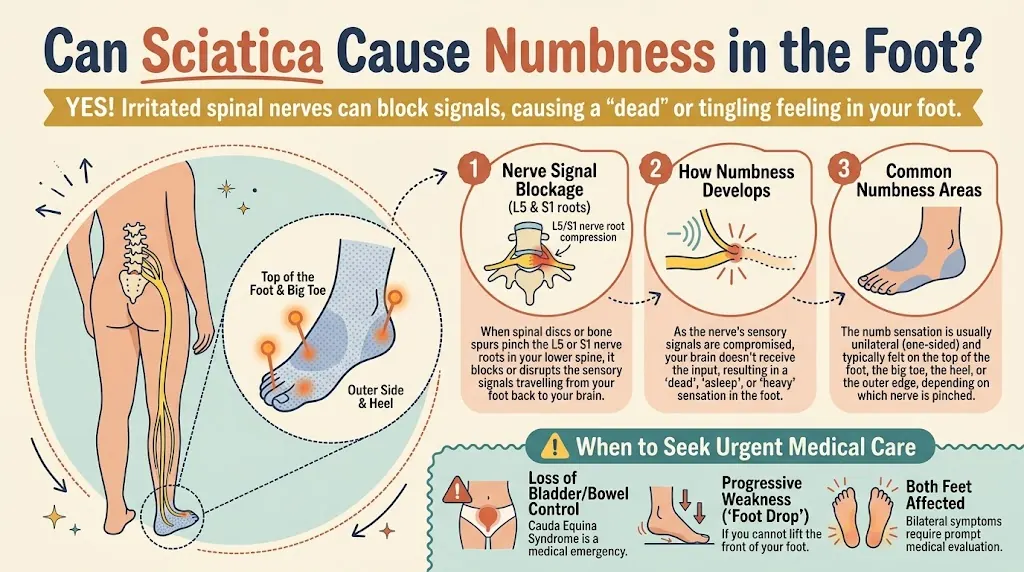
New weakness or numbness, especially involving the legs or the area around the groin, or new loss of bowel or bladder control can indicate a serious neurological problem.
Seek urgent medical attention rather than assuming these symptoms are caused by constipation.
It is also important to distinguish this situation from the reverse possibility: sometimes severe or painful back problems can affect activity, routines, medications, or bathroom habits. If you are wondering whether back pain can make you constipated, the relationship may involve factors other than constipation directly causing the original back pain.
A Simple Daily Routine for Constipation-Related Back Discomfort
If your symptoms are mild and you have no warning signs, keep your routine straightforward.
Morning
Start the day with an appropriate amount of fluid and a fiber-containing breakfast. Give yourself enough time to use the bathroom rather than rushing.
During the Day
Stay physically active when comfortable. Walk regularly and avoid spending the entire day sitting.
Choose meals that contain vegetables, fruit, whole grains, beans, lentils, nuts, or other fiber-rich foods.
When You Need to Go
Respond to the urge instead of repeatedly delaying it. Use a comfortable toilet position and avoid excessive straining.
For Your Back
Keep moving gently. Avoid heavy lifting and movements that clearly aggravate your pain until you have a better understanding of its cause.
When Should You See a Doctor?
Make an appointment with a healthcare professional if constipation:
- Keeps returning
- Does not improve with reasonable lifestyle changes
- Is accompanied by persistent abdominal discomfort
- Is associated with blood in the stool
- Occurs with unexplained weight loss
- Is accompanied by persistent lower back pain
- Represents a significant or unexplained change in your usual bowel habits
A healthcare professional can determine whether the constipation and back pain are related or whether they need to be evaluated separately.
Conclusion
The most useful way to relieve lower back pain associated with constipation is usually to address the constipation while avoiding additional strain on the back. Gradually increasing fiber, drinking adequate fluids, staying gently active, responding to the urge to have a bowel movement, and avoiding excessive straining can support healthier bowel habits.
A warm compress or gentle movement may temporarily ease muscular back soreness, but these measures do not treat the underlying constipation.
Most importantly, do not assume every episode of lower back pain during constipation is harmless. Severe or persistent pain, vomiting, fever, blood in the stool, significant abdominal swelling, inability to pass gas or stool, new weakness or numbness, or loss of bowel or bladder control requires medical evaluation.
If your constipation improves but your lower back pain does not, the two symptoms may have separate causes and the back pain should be assessed accordingly.
Frequently Asked Questions
1. How can I relieve lower back pain caused by constipation?
Address the constipation with adequate fluids, gradually increased fiber, gentle physical activity, a regular bathroom routine, and less straining. If the back pain persists after constipation improves, another cause may need to be considered.
2. Can constipation really cause lower back pain?
Yes. Bowel distension, abdominal pressure, bloating, and repeated straining can contribute to lower-back discomfort in some people. However, constipation occurring at the same time as back pain does not prove that constipation is the cause.
3. What is the fastest way to relieve constipation-related back pain?
There is no single fastest treatment for everyone. Improving bowel movements while avoiding excessive straining may reduce discomfort when constipation is contributing to the symptoms.
4. Does drinking water help constipation-related back pain?
Adequate fluid intake can support softer stools and is particularly useful when increasing dietary fiber. People who have been advised to restrict fluids should follow their healthcare professional’s instructions.
5. What foods help constipation and lower back pain?
Fiber-rich foods such as fruits, vegetables, whole grains, beans, lentils, nuts, and seeds can support regular bowel movements. Increase fiber gradually rather than making a sudden large dietary change.
6. Can walking help constipation and back pain?
Gentle physical activity can support bowel function and reduce stiffness associated with prolonged sitting. A comfortable walk can be reasonable if it does not worsen your back pain.
7. Should I take a laxative for constipation-related back pain?
A laxative may be appropriate for some people, but the best option depends on the situation. A pharmacist or healthcare professional can help determine whether one is suitable, particularly if lifestyle measures have not worked.
8. How long does lower back pain from constipation last?
It varies. If constipation is contributing to the pain, symptoms may improve as bowel movements normalize. Muscular soreness from repeated straining may take longer to settle.
9. When is constipation with back pain an emergency?
Severe pain accompanied by vomiting, fever, significant abdominal swelling, inability to pass gas or stool, new weakness or numbness, or loss of bowel or bladder control requires urgent medical attention.
10. What if my constipation improves but my back pain remains?
The back pain may have a separate cause. If it persists, becomes severe, or interferes with normal activities, arrange a medical evaluation.
Disclaimer: This article is intended for educational purposes only and should not be considered personalized medical advice.