Yes, sciatica can cause calf pain. Sciatica develops when the sciatic nerve or its contributing nerve roots become irritated or compressed, often because of a herniated disc or age-related changes in the spine. However, calf pain does not always come from sciatica. Muscle strain, circulation problems, and a blood clot can also cause lower-leg discomfort, so the location and accompanying symptoms matter.
Understanding how sciatica-related calf pain feels, what may trigger it, and how it differs from other causes can help you decide what to do next. This guide explains common symptoms, safe home-care options, expected recovery, and warning signs that require medical attention.
How Does Sciatica Cause Calf Pain?
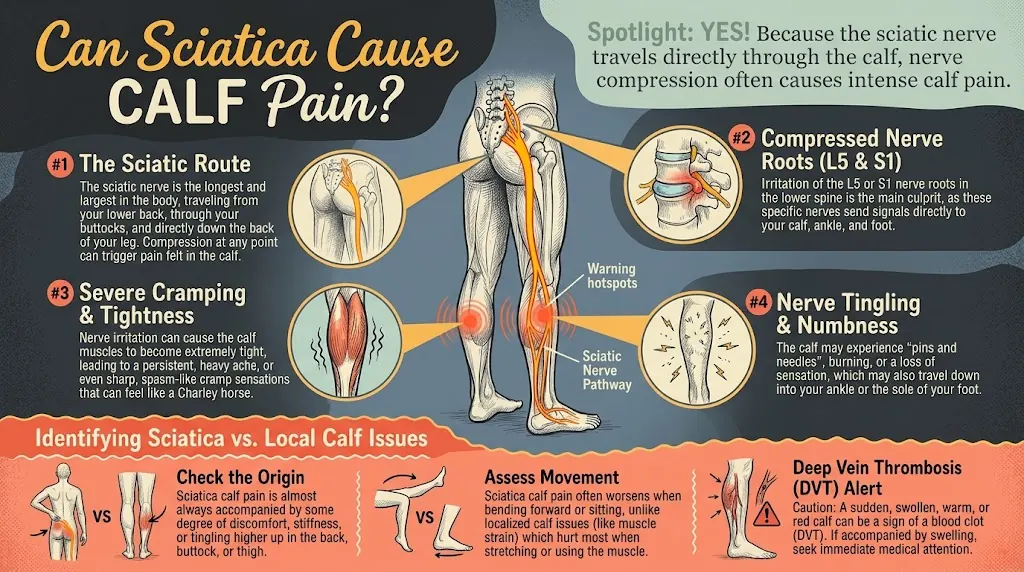
Sciatica can cause calf pain when irritation or compression affects nerve roots in the lower spine that contribute to the sciatic nerve. These nerves carry sensory and movement signals between the lower back and parts of the leg and foot.
The sciatic nerve travels through the buttock and down the back of the leg, with branches supplying the lower leg and foot. When a nerve root becomes irritated, pain may travel along its pathway rather than remaining near the spine.
Common underlying causes include:
-
Herniated disc: Disc material can irritate or compress a nearby nerve root.
-
Spinal stenosis: Narrowing of the spinal canal or nerve openings may put pressure on nerves.
-
Age-related spinal changes: Arthritis and changes around spinal joints can contribute to nerve irritation.
-
Other sources of nerve irritation: Less commonly, irritation around the buttock or other conditions can produce similar symptoms.
Learn more about what causes sciatica and sciatic nerve pain to understand why symptoms can extend from the back into the lower leg.
What Does Sciatica Calf Pain Feel Like?
Sciatica-related calf pain may feel different from ordinary muscle soreness. Some people experience one symptom, while others notice several at once.
| Symptom | How it may feel | What it can suggest |
|---|---|---|
| Shooting pain | Pain traveling from the buttock or thigh into the calf | Possible nerve irritation |
| Burning sensation | Hot, stinging, or electric-like discomfort | Neuropathic pain |
| Tingling or pins and needles | Prickling in the calf, ankle, or foot | Sensory nerve involvement |
| Numbness | Reduced sensation in part of the lower leg | Possible nerve compression |
| Weakness | Difficulty lifting the foot or pushing off while walking | Possible motor nerve involvement |
| Aching or tightness | Persistent discomfort that changes with posture | Several possible causes, including sciatica |
Sciatica commonly affects one leg, although the precise distribution varies. You may have lower-back pain, but it is also possible to experience leg pain with little or no back discomfort.
For more detail, see how sciatica can cause knee pain, why sciatica can cause foot pain, and whether sciatica can cause tingling in the leg.
Sciatica vs. Other Causes of Calf Pain
Sciatica is one possible explanation for calf pain, but certain features can help distinguish it from other conditions. Symptoms alone cannot confirm the cause.
| Possible cause | Typical pattern | Important clues |
|---|---|---|
| Sciatica | Pain traveling from the back or buttock into the calf | Tingling, numbness, or symptoms affected by spinal position |
| Calf muscle strain | Localized pain in the calf | Often follows exercise, sudden movement, or overstretching |
| Deep vein thrombosis (DVT) | Pain or tenderness in one calf | May include swelling, warmth, or skin discoloration |
| Peripheral artery disease | Calf discomfort during walking | Often improves with rest; circulation may be reduced |
| Peripheral nerve disorder | Burning, tingling, or numbness | Symptoms may affect the feet or both legs, depending on the cause |
A particularly important distinction is between sciatica and DVT, a blood clot in a deep vein. New calf pain with one-sided swelling, warmth, or redness needs prompt medical assessment, especially after surgery, prolonged immobility, or a long journey. Do not assume these symptoms are caused by sciatica.
If calf pain occurs alongside back symptoms, reviewing common causes of lower-back pain may help you prepare for a medical evaluation. However, a clinician must assess the symptoms to determine the likely cause.
What Makes Sciatica Calf Pain Worse?
Sciatica-related calf pain may worsen when an irritated nerve is placed under additional mechanical stress. The triggers differ from person to person, depending on the location and cause of the nerve irritation.
Common aggravating factors include:
-
Prolonged sitting: Sitting for extended periods may aggravate symptoms, particularly when the back is bent forward.
-
Bending or lifting: Repeated bending, twisting, or heavy lifting may increase discomfort in some people.
-
Coughing or sneezing: These actions can briefly increase pressure around spinal nerve roots.
-
Certain walking patterns: Walking may aggravate symptoms when nerve compression or spinal narrowing is present.
-
Poorly tolerated exercises: Forceful stretches or movements that reproduce shooting pain may worsen irritation.
Some people notice calf pain after sitting, while others experience it mainly during standing or walking. For practical guidance, see whether sitting too much can trigger sciatica, why sciatica may hurt when walking, and what to avoid during a sciatica flare-up.
How Can You Relieve Sciatica Calf Pain at Home?
Home care may help mild, uncomplicated sciatica, but treatment should match your symptoms and physical abilities. It is important not to overlook calf pain caused by a circulation problem or another condition requiring medical treatment.
1. Keep moving gently
Avoid prolonged bed rest when possible. Try short, comfortable walks or change positions regularly, reducing activity if it causes increasing or spreading pain. Stop and seek advice if you develop new numbness or weakness.
2. Try heat or ice
A wrapped cold pack may ease discomfort after an aggravating activity, while gentle heat may help relax tight muscles. Apply either for about 15–20 minutes at a time, protect your skin, and avoid extreme temperatures or direct contact with heating or cooling devices.
For further guidance, compare heat or ice for back-related pain and ways to relieve back pain at home.
3. Choose comfortable positions
When sitting, use a supportive chair and avoid remaining in one position for long periods. While resting, experiment with lying on your side with a pillow between your knees or on your back with a pillow under your knees.
If nighttime symptoms interfere with sleep, explore sleeping positions that may help sciatica.
4. Be cautious with stretching and exercise
Gentle movement may help maintain mobility, but aggressive hamstring stretches or nerve-tension exercises can worsen symptoms in some people. Stop any movement that produces stronger shooting pain, increasing tingling, or new weakness.
A physical therapist can help select appropriate movements. See exercises for lower-back pain and how physical therapy may help back pain for more information.
5. Discuss medication safety with a clinician or pharmacist
Over-the-counter pain relievers may help some people, but they are not appropriate for everyone. Anti-inflammatory medicines can pose risks for people with kidney disease, stomach ulcers, certain cardiovascular conditions, or those taking blood thinners. Ask a healthcare professional which option is appropriate for you.
How Long Does Sciatica Calf Pain Last?
Sciatica-related calf pain often improves over several weeks, although recovery can take a few months or longer. The timeline depends on the underlying cause, symptom severity, and whether nerve irritation continues.
NHS clinical guidance describes improvement over weeks to months, with some cases lasting longer. Symptoms may fluctuate during recovery rather than disappearing steadily each day.
| Recovery pattern | What you may notice | What to do |
|---|---|---|
| Early improvement | Pain becomes less intense or travels less far down the leg | Continue tolerable daily activities |
| Gradual recovery | Sitting, walking, or sleeping becomes easier | Increase activity progressively |
| Persistent symptoms | Calf pain, tingling, or numbness continues with little improvement | Arrange a clinical assessment |
| Worsening symptoms | New weakness, increasing numbness, or rapidly escalating pain | Seek prompt medical evaluation |
Persistent symptoms do not automatically mean permanent nerve damage, but they should not be ignored. If your symptoms may involve a disc problem, understanding what a herniated disc feels like can help you prepare questions for your clinician.
How Is Sciatica-Related Calf Pain Diagnosed?
A clinician typically reviews your symptoms, medical history, and physical examination findings. They may assess your walking, leg strength, sensation, reflexes, and how certain movements affect the pain.
The evaluation also considers other possible causes, including calf muscle injury, blood clots, and circulation disorders. Tell the clinician whether the pain began suddenly, whether one calf is swollen, and whether you have experienced numbness or weakness.
An MRI is not routinely needed for every episode of sciatica. Imaging may be considered when symptoms persist, serious conditions are suspected, or the results would change treatment decisions.
If pain continues despite home care, find out when you should see a doctor for lower-back pain and whether lower-back pain needs an MRI.
Warning Signs: When Should Calf Pain Be Evaluated?
Symptoms that may be monitored briefly
Mild pain that follows a familiar pattern, improves with gentle movement, and is not accompanied by swelling, progressive numbness, or weakness may be monitored while you use appropriate self-care.
Seek a medical appointment if symptoms persist for several weeks, repeatedly return, interfere with normal activities, or worsen despite reasonable home treatment.
Symptoms requiring prompt medical assessment
Arrange urgent evaluation for new calf swelling, warmth, redness, or unexplained tenderness, especially when one leg is affected. These symptoms can indicate DVT and should not be treated as ordinary sciatica without assessment.
New or increasing leg weakness, significant numbness, or rapidly worsening pain also requires prompt evaluation.
Symptoms requiring emergency care
Seek emergency care immediately if you develop:
-
New difficulty starting urination, inability to urinate, or loss of bladder or bowel control.
-
Numbness around the groin, genitals, or buttocks.
-
Severe or rapidly worsening weakness, particularly in both legs.
-
Calf pain or swelling accompanied by sudden shortness of breath or chest pain.
These symptoms can indicate serious nerve compression or a blood clot that has traveled to the lungs. Do not wait to see whether home treatment helps. For additional guidance, see when back pain is an emergency.
Frequently Asked Questions
1. Can sciatica cause calf pain without lower-back pain?
Yes. Sciatica can cause pain that travels into the calf even when back pain is mild or absent. A clinical assessment can help determine whether nerve irritation or another condition is responsible.
2. Can sciatica cause pain in just one calf?
Yes. Sciatica commonly affects one side of the body, so pain may be limited to one calf. However, one-sided calf pain can also occur with a muscle injury or blood clot, particularly when swelling or warmth is present.
3. Why does my calf hurt more when I sit?
Sitting may aggravate sciatica by increasing discomfort around an irritated nerve root or placing the lower back in a position that worsens symptoms. Try changing positions regularly and taking short, comfortable movement breaks.
4. Can sciatica cause calf cramps?
It can cause muscle discomfort, spasms, or sensations resembling cramps. However, dehydration, muscle overuse, medication effects, and circulation problems can also cause cramping, so persistent or unexplained symptoms deserve evaluation.
5. Can sciatica cause weakness in the calf or leg?
Yes. Nerve compression can affect the muscles that control leg and foot movements. New or worsening weakness, difficulty walking, or trouble lifting the front of the foot requires prompt medical assessment. See how sciatica can cause leg weakness.
6. Can sciatica cause numbness in the calf or foot?
Yes. Irritated nerves can cause reduced sensation, tingling, or numbness in different parts of the leg. Persistent or worsening numbness should be assessed, particularly if it occurs with weakness. Read about foot numbness associated with sciatica.
7. Is walking good for sciatica calf pain?
Gentle walking may help maintain mobility and prevent the effects of prolonged inactivity. Start with short distances and adjust your pace to your symptoms; stop and seek advice if walking causes increasing weakness or severe pain.
8. How long should I wait before seeing a doctor?
Seek an appointment if calf pain does not improve after a few weeks, affects daily activities, or keeps returning. Do not wait if you develop swelling, progressive weakness, significant numbness, or other warning signs described above.
9. Can a herniated disc cause calf pain?
Yes. A herniated disc in the lower spine can irritate a nerve root that contributes to the sciatic nerve, sending pain into the calf. Recovery varies, and how long a herniated disc takes to heal depends on the individual and the severity of the problem.
10. Does sciatica calf pain mean I need surgery?
No. Many cases improve with time, activity adjustments, and appropriate nonsurgical treatment. Surgery may be considered in selected cases involving persistent disabling symptoms or significant nerve compression, and emergency intervention may be necessary for serious neurological symptoms.
Conclusion
Sciatica can cause calf pain when nerves in the lower spine become irritated or compressed, sometimes producing shooting pain, tingling, numbness, or weakness. Gentle movement, comfortable positioning, and appropriate symptom management may help during recovery.
However, calf pain has several possible causes. Arrange a medical assessment if symptoms persist or worsen, and seek emergency care for bladder or bowel changes, groin numbness, severe progressive weakness, or calf symptoms accompanied by chest pain or sudden shortness of breath.
Disclaimer: This article is provided for educational and informational purposes only.