Sitting-related sciatica can be frustrating, especially when it interferes with work, sleep, or everyday activities. Although prolonged sitting may aggravate nerve-related pain, discomfort during sitting does not automatically mean you have sciatica. Persistent symptoms, new numbness, or weakness deserve attention rather than being dismissed as ordinary muscle soreness.
Sciatica describes pain caused by irritation or compression of the sciatic nerve or its nerve roots. This guide explains why sitting can make sciatica worse, how to adjust your sitting position, which home treatments may help, how recovery typically progresses, and when to seek medical care.
Why Does Sciatica Get Worse When Sitting?
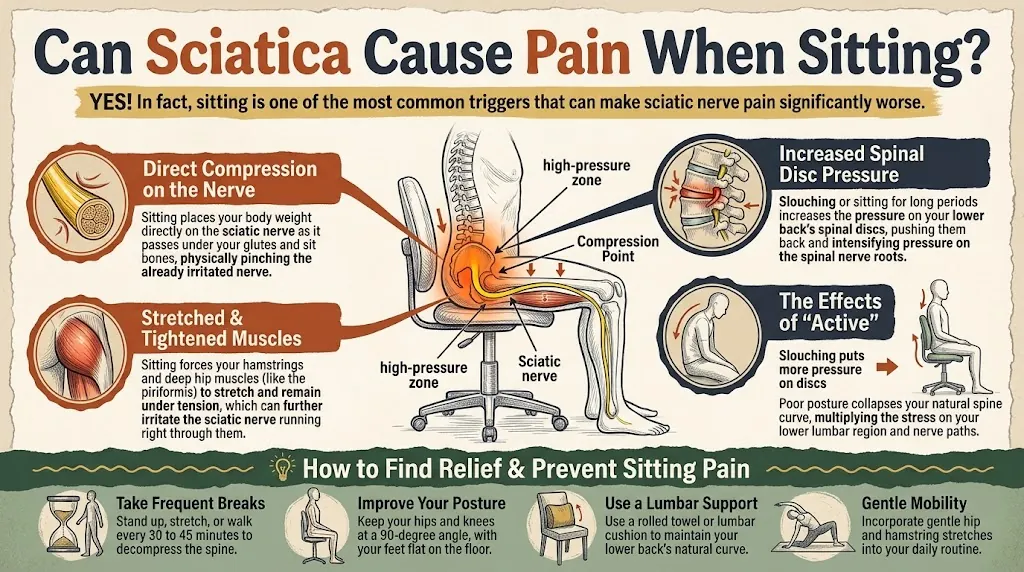
Sitting can aggravate sciatica because it changes the position and loading of your lower spine and hips. Depending on the underlying cause, bending forward, slouching, or remaining in one position may increase irritation around a sensitive nerve root.
Common explanations include:
-
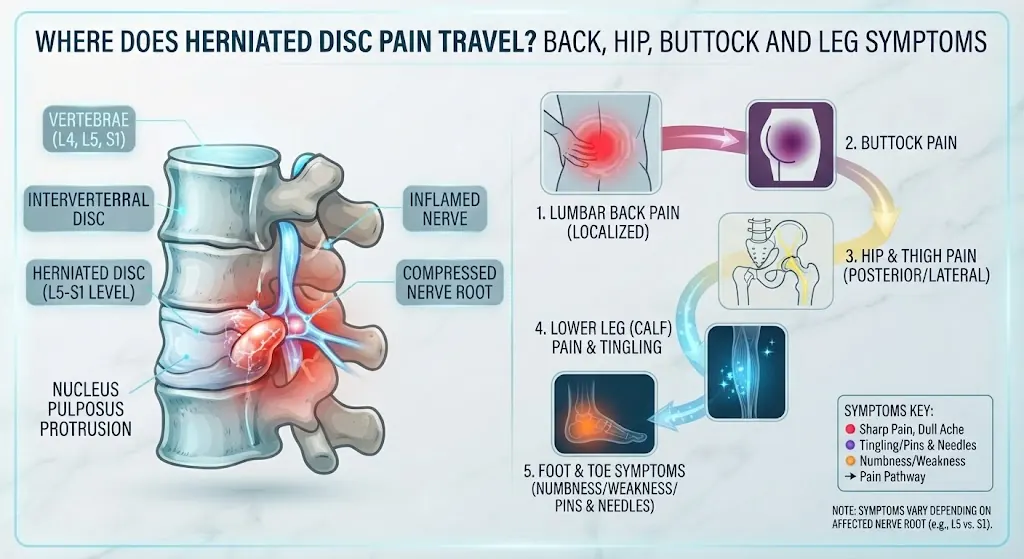
Herniated disc: A disc in the lower spine may irritate a nearby nerve, sometimes making sitting and forward bending uncomfortable.
-
Prolonged pressure: Staying seated for extended periods can increase discomfort in already sensitive tissues.
-
Poor sitting support: Slouching or sitting without adequate back support may aggravate symptoms in some people.
-
Deep buttock muscle irritation: Muscles around the hip, including the piriformis, can sometimes contribute to sciatica-like symptoms.
-
Spinal stenosis: Narrowing around the spinal nerves may cause leg pain, tingling, or weakness, although symptoms often vary with posture and activity.
Understanding the common causes of sciatica can help explain why one sitting position feels comfortable while another triggers symptoms. However, posture alone cannot establish the cause.
What Does Sciatica Pain From Sitting Feel Like?
Sciatica often affects one side of the body and may cause pain that travels from the lower back or buttock down the leg. Symptoms can include burning, shooting pain, pins and needles, or numbness. Some people experience leg pain without much back pain.
| Symptom | What you may notice |
|---|---|
| Shooting pain | Pain traveling from the buttock into the thigh or lower leg |
| Burning or tingling | A hot, prickling, or electric sensation |
| Numbness | Reduced sensation in part of the leg or foot |
| Muscle weakness | Difficulty lifting the foot or moving the leg normally |
| Sitting intolerance | Symptoms increase during prolonged sitting and ease after changing position |
Pain that travels into the hip or buttock may occur with sciatica, but hip joint problems and muscle conditions can cause similar discomfort. Likewise, tingling down the leg or numbness in the foot can indicate nerve involvement and should be assessed if persistent or worsening.
How Can You Relieve Sciatica Pain When Sitting?
The goal is to reduce aggravating pressure without becoming inactive. These practical changes may help:
-
Change positions frequently. Stand up, take a few steps, or gently move before pain becomes intense. There is no single break interval that works for everyone.
-
Support your lower back. Use a chair with back support or a small rolled towel behind your lower back if comfortable.
-
Keep your feet supported. Place your feet flat on the floor when possible and avoid forcing yourself into a rigid posture.
-
Avoid prolonged slouching. Try not to remain curled forward or seated in a position that consistently sends pain down your leg.
-
Try gentle movement. Short walks may help maintain mobility if they do not increase symptoms.
These adjustments may be especially useful if sitting too much aggravates sciatica. For more detailed guidance, see how to sit to reduce lower back pain and how often to take breaks from sitting.
Which Sitting Positions Should You Try?
| Position or habit | Potential benefit | What to watch for |
|---|---|---|
| Upright, supported sitting | May reduce strain for some people | Avoid holding a rigid posture |
| Slightly reclined sitting | May feel more comfortable with certain disc-related symptoms | Stop if leg pain increases |
| Frequent position changes | Reduces time spent in one posture | Move gently rather than abruptly |
| Soft couch or deep chair | Convenient for relaxing | Slouching may aggravate symptoms |
No sitting position works for everyone. Choose the position that reduces symptoms, and do not force a stretch or posture that intensifies radiating pain.
Can Heat, Ice, or Exercises Help?
Heat or ice may provide temporary relief. Apply a wrapped cold pack or a comfortably warm pack for about 15–20 minutes, checking your skin regularly. Avoid direct skin contact and use extra caution if you have reduced sensation.
Gentle activity is usually preferable to prolonged bed rest. However, aggressive stretching, heavy lifting, and exercises that worsen leg symptoms may aggravate an irritated nerve. Review what to avoid doing with sciatica and consider exercises for lower back pain only when the movements are appropriate for your symptoms.
If home care is not enough, a clinician or physical therapist can assess your movement and recommend individualized treatment. Learn more about how physical therapy may help lower back pain.
How Long Does Sciatica Pain When Sitting Last?
Recovery depends on the cause, symptom severity, and whether nerve irritation continues. Many episodes improve over several weeks, but some persist longer or recur. A precise recovery timeline cannot be predicted from sitting pain alone.
| Pattern | Reasonable next step |
|---|---|
| Mild symptoms that improve with movement | Monitor symptoms and adjust activities |
| Pain that persists or interferes with daily life | Arrange a medical assessment |
| Increasing numbness or weakness | Seek prompt medical evaluation |
| New bladder or bowel problems with severe back or leg symptoms | Seek emergency care |
If pain is not improving, is repeatedly returning, or limits your ability to sit, work, or sleep, arrange an appointment rather than relying on home treatment indefinitely.
When Should You Seek Medical Care?
Symptoms you can usually monitor
Mild pain that improves with movement and has no new neurological symptoms may be monitored while you adjust your activities. Keep track of what triggers the pain and whether it is becoming less frequent or intense.
Symptoms needing medical evaluation
Contact a healthcare professional if pain persists, repeatedly returns, disrupts sleep, or limits normal activities. Pain associated with leg weakness from sciatica needs particular attention. A clinician may assess your strength, sensation, reflexes, and spinal movement.
Symptoms requiring emergency care
Seek emergency care for new difficulty controlling your bladder or bowels, inability to urinate, numbness around the groin or inner thighs, or rapidly worsening leg weakness. These can indicate serious nerve compression. Review when back pain is an emergency for additional warning signs.
Frequently Asked Questions
1. Can sitting cause sciatica?
Prolonged sitting may aggravate existing sciatica, particularly when a spinal nerve is already irritated. Sitting alone does not necessarily cause sciatica.
2. Why does sciatica hurt more when I sit than stand?
Sitting changes the position of your spine and hips, potentially increasing symptoms from certain disc or nerve conditions. The difference varies with the underlying cause.
3. Can a herniated disc cause pain when sitting?
Yes. A herniated disc may irritate a nearby nerve and cause pain that travels into the buttock or leg. Imaging is not always necessary; a clinician determines whether testing is appropriate.
4. Is walking better than sitting with sciatica?
Gentle walking may ease stiffness and help you stay active. If walking significantly increases pain, numbness, or weakness, stop and seek medical advice as appropriate.
5. How should I sleep if sitting makes my sciatica worse?
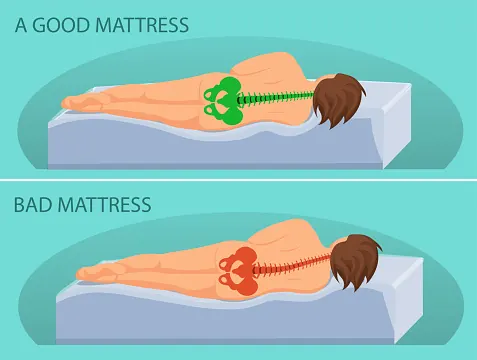
Try sleeping on your side with a pillow between your knees or on your back with a pillow beneath your knees if comfortable. Guidance on sleeping positions for sciatica may help you find a tolerable position.
6. Can sciatica cause hip pain?
Yes. Sciatica can cause pain around the buttock and sometimes the hip area. However, hip pain associated with sciatica can overlap with hip joint and muscle conditions.
7. Should I use heat or ice for sitting-related sciatica?
Either may provide temporary relief, depending on your symptoms and preference. Follow safe application practices and see how heat and ice compare for back pain.
8. Can I relieve sciatica at home?
Gentle movement, comfortable sitting support, and activity adjustments may help. These ways to relieve back pain at home can support comfort but cannot replace evaluation when symptoms are severe or persistent.
9. When should I see a doctor for sciatica?
Seek an appointment if symptoms persist, worsen, or interfere with daily activities. Follow guidance on when to see a doctor for lower back pain, and seek emergency care for the warning signs described above.
10. Can sciatica last for months?
Yes. Some cases persist for months, depending on the cause and severity. If symptoms continue for six months or longer, discuss them with a clinician; persistent sciatica after six months warrants reassessment.
Conclusion
Sciatica pain when sitting may result from irritation of spinal nerves, and prolonged sitting can make symptoms worse. Frequent position changes, supportive seating, and gentle movement may help, but persistent pain or worsening neurological symptoms require medical evaluation. Start by adjusting your sitting habits and arrange an assessment if your symptoms are not improving.
Disclaimer: This article is provided for educational and informational purposes only.