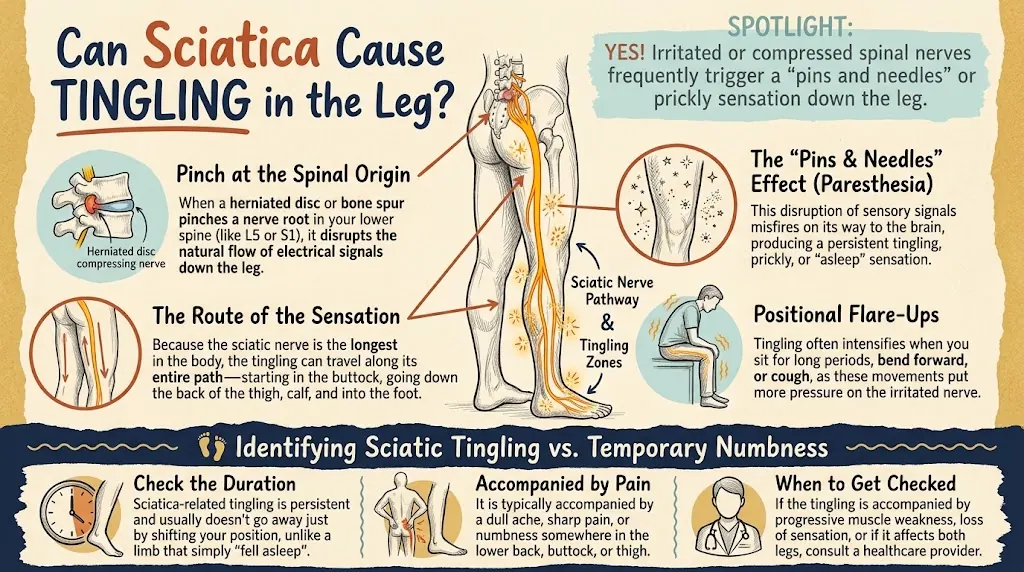
Yes, sciatica can cause tingling in the leg. This sensation may occur when the sciatic nerve or the nerve roots that contribute to it become irritated or compressed. However, tingling does not always mean sciatica; other nerve conditions, circulation problems, and certain vitamin or metabolic disorders can produce similar symptoms.
Understanding what sciatica-related tingling feels like, what may trigger it, and how to respond can help you decide what to do next. This guide explains common causes, safe self-care options, expected recovery, and warning signs that require medical attention.
What Does Sciatica Tingling Feel Like?
Sciatica-related tingling often follows a path from the lower back or buttock down one leg. The sensation may be intermittent or persistent and can occur with pain, burning, numbness, or muscle weakness.
Some people experience leg tingling without significant back pain. Others notice symptoms after sitting for a long time, bending forward, or getting up from a chair.
Common symptoms include:
-
Pins-and-needles sensations in the thigh, calf, ankle, or foot.
-
Burning, buzzing, or electric-like feelings traveling down the leg.
-
Numb patches or reduced sensation in parts of the leg.
-
Symptoms that worsen with certain movements or prolonged positions.
-
Weakness in the leg or foot in more significant cases.
The location can provide clues, but it cannot identify the cause on its own. For example, tingling in the foot associated with lower back pain may indicate nerve irritation, while symptoms limited to a small area of the leg may have another explanation.
What Causes Tingling in the Leg From Sciatica?
Sciatica-related tingling usually develops when a nerve root in the lower spine or the sciatic nerve becomes irritated, inflamed, or compressed. The sensation occurs because the affected nerve sends altered sensory signals to the leg.
Common underlying causes include:
-
Herniated disc: A spinal disc bulges or ruptures and irritates a nearby nerve root.
-
Spinal stenosis: Narrowing around the spinal nerves creates pressure, sometimes especially during standing or walking.
-
Age-related spinal changes: Changes in discs and joints can reduce space around the nerves.
-
Muscle-related nerve irritation: Tight or irritated tissues around the buttock may produce sciatica-like symptoms.
-
Injury or repetitive strain: Heavy lifting, repeated bending, or an injury may aggravate the lower back and surrounding nerves.
For more detail, see what causes sciatic nerve pain.
A herniated disc is a frequent cause of sciatica, but not every disc abnormality causes symptoms. Imaging findings must be interpreted alongside a person’s symptoms and physical examination.
Where Can Sciatica Tingling Occur?
The location of tingling varies according to which nerve root is affected. Symptoms may travel down the back or side of the leg and reach the foot or toes.
| Tingling location | Possible pattern | What to consider |
|---|---|---|
| Buttock and back of thigh | Tingling extending from the lower back or buttock | Sciatic nerve irritation may be involved |
| Calf or outer lower leg | Pins and needles traveling below the knee | A lower spinal nerve root may be irritated |
| Foot or toes | Tingling, numbness, or altered sensation | Nerve involvement may extend into the foot |
| Both legs | Symptoms affecting both sides | Needs careful assessment, particularly if new or worsening |
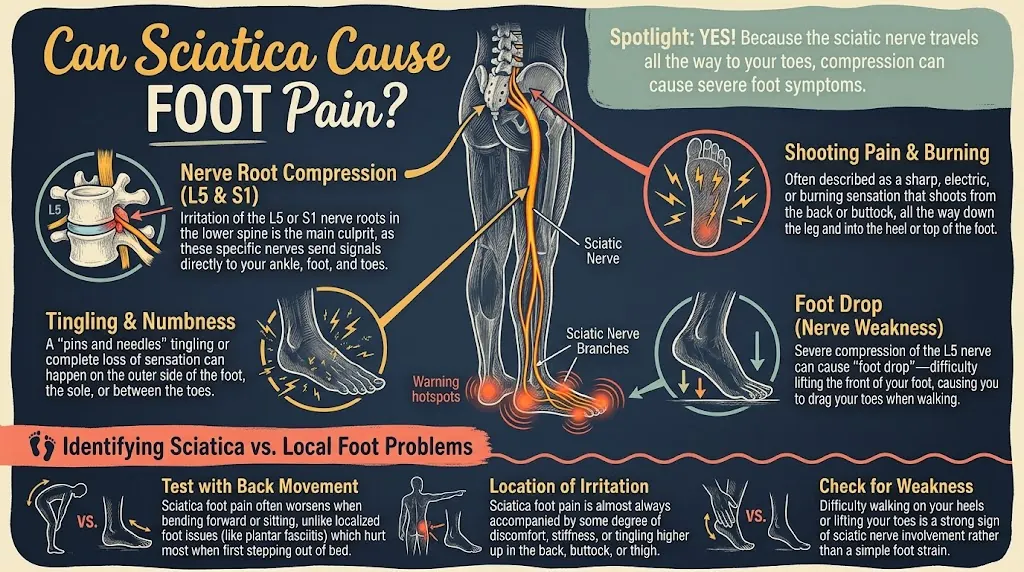
For example, sciatica-related foot pain or numbness in the foot from sciatica may occur alongside tingling. However, these symptoms can also result from peripheral neuropathy, diabetes, or other nerve conditions.
Early symptoms can be subtle. Recognizing the first signs of sciatica may help you describe changes accurately during a medical appointment.
What Makes Sciatica Tingling Worse?
Certain positions and activities may increase pressure or tension around an irritated nerve. Common triggers include prolonged sitting, repeated bending, heavy lifting, and movements that reproduce symptoms down the leg.
| Trigger | Why symptoms may increase | Practical adjustment |
|---|---|---|
| Sitting for long periods | A sustained position may aggravate nerve-related symptoms | Change position regularly |
| Bending or lifting | Repeated spinal loading may irritate sensitive tissues | Reduce heavy lifting temporarily |
| Walking or standing | Some spinal conditions become more symptomatic upright | Shorten walks and take breaks |
| Sleeping in one position | Sustained posture may aggravate discomfort | Try a more comfortable supported position |
If sitting makes sciatica worse, alternate sitting with brief periods of standing or gentle walking. If symptoms occur mainly during walking, understanding sciatica pain when walking may help you recognize why activity tolerance matters.
Nighttime symptoms also deserve attention. Read about why sciatica may feel worse at night or why sciatica may be worse in the morning if symptoms vary with sleep and waking.
How Can You Relieve Sciatica Tingling at Home?
Mild tingling without weakness or other warning signs may improve with gentle movement and adjustments to activities that trigger symptoms. Home care can reduce discomfort, but it cannot correct every cause of nerve compression.
1. Keep moving within your limits
Avoid prolonged bed rest. Try short, comfortable walks and change positions regularly. Stop or modify an activity if it increases tingling, spreads symptoms farther down the leg, or causes new numbness.
2. Adjust sitting and sleeping positions
Use a supportive chair and keep your feet comfortably supported. When sleeping, try lying on your side with a pillow between your knees or on your back with a pillow under your knees.
These positions are not universal solutions, so choose the one that feels comfortable rather than forcing a particular posture. For more guidance, see how to sleep with sciatica.
3. Be cautious with stretching and exercise
Gentle movement may help maintain mobility, but aggressive stretching can aggravate an irritated nerve. Avoid exercises that repeatedly increase leg tingling or cause symptoms to spread.
A clinician or physical therapist can recommend movements suited to your symptoms. General exercises for lower back pain may not be appropriate for every person with sciatica.
4. Use heat or cold carefully
A wrapped cold pack or comfortably warm pack may ease associated discomfort. Apply it for about 15–20 minutes at a time, protect your skin, and avoid direct contact with extreme temperatures, especially where sensation is reduced.
5. Avoid activities that provoke symptoms
Temporarily reduce heavy lifting, repeated twisting, and prolonged positions that clearly worsen symptoms. You do not necessarily need to stop all physical activity. Follow practical guidance on what to avoid doing with sciatica.
For additional comfort measures, review how to relieve back pain at home.
How Long Does Sciatica Tingling Last?
Sciatica-related tingling may improve over several weeks, but recovery depends on the cause, severity of nerve irritation, and whether weakness or sensory loss is present. Some cases persist for months or recur.
| Symptom pattern | Recommended response |
|---|---|
| Mild, occasional tingling that resolves quickly | Monitor it and adjust aggravating positions |
| Repeated tingling that persists or interferes with daily activities | Arrange a medical assessment |
| Increasing numbness, new weakness, or worsening symptoms | Seek prompt medical evaluation |
| Tingling with bladder, bowel, or saddle-area sensory changes | Seek emergency care immediately |
Do not rely on duration alone to decide whether symptoms are safe. Persistent or worsening symptoms need assessment even if the discomfort is manageable.
When Should You See a Doctor for Leg Tingling?
Arrange an appointment if tingling keeps returning, lasts longer than expected, interferes with walking or sleep, or occurs with persistent back or leg pain. A clinician can check sensation, strength, reflexes, and movement to help distinguish sciatica from other causes.
Other possibilities include peripheral neuropathy, a nerve compressed near the knee, or circulation problems. For example, tight piriformis muscle symptoms that resemble sciatica can overlap with spinal nerve symptoms, making an examination useful.
Depending on the findings, the clinician may consider a herniated disc, spinal stenosis symptoms, or another explanation. MRI is not routinely needed for every new episode; it may be considered when symptoms are severe, persistent, progressive, or when imaging would change treatment.
Warning Signs: When Is Leg Tingling an Emergency?
Seek emergency care immediately if tingling occurs with any of the following:
-
New difficulty starting urination, inability to urinate, or loss of bladder or bowel control.
-
Numbness around the genitals, inner thighs, or buttocks (saddle area).
-
Severe or rapidly worsening weakness, especially in both legs.
-
Sudden major changes in leg function or walking ability.
These can indicate serious nerve compression, including cauda equina syndrome, which requires urgent evaluation. New or progressive weakness also warrants prompt medical attention; leg weakness associated with sciatica should not be dismissed as ordinary tingling.
Frequently Asked Questions
1. Can sciatica cause tingling without back pain?
Yes. Sciatica can cause tingling, pain, or numbness in the leg even when back pain is mild or absent. A clinical assessment can help determine whether the symptoms originate in the spine or elsewhere.
2. Does tingling mean my sciatic nerve is healing?
Not necessarily. Tingling can reflect ongoing nerve irritation and does not reliably indicate recovery. Monitor whether symptoms are improving, spreading, or accompanied by weakness.
3. Can a herniated disc cause leg tingling?
Yes. A herniated disc may irritate a spinal nerve root and produce tingling, numbness, or pain that travels down the leg. Learn what a herniated disc can feel like for a broader overview of possible symptoms.
4. Is leg tingling from sciatica permanent?
Usually, symptoms improve as the underlying irritation settles, but recovery varies. Persistent nerve compression or nerve damage can cause lasting sensory changes, so ongoing or worsening symptoms need evaluation.
5. Can walking help sciatica-related tingling?
Gentle walking may help maintain mobility and reduce stiffness. Start with short distances and stop if tingling becomes significantly worse or new weakness develops.
6. Should I use heat or ice for sciatica tingling?
Heat or cold may ease associated pain, but neither directly establishes or treats the underlying nerve problem. Protect areas with reduced sensation from burns and cold injury.
7. Can sciatica cause tingling in both legs?
It can, but symptoms in both legs require particular caution, especially if they are new, severe, or worsening. If accompanied by saddle numbness or bladder or bowel changes, seek emergency care.
8. When should I get an MRI for sciatica?
An MRI is not necessary for every episode. A clinician may recommend it when symptoms persist despite appropriate care, neurological problems progress, or imaging is needed to guide treatment.
9. What kind of doctor should I see for persistent leg tingling?
A primary care clinician is a reasonable starting point. Depending on the examination, you may be referred to a neurologist, spine specialist, or physical therapist; seek urgent care for new or worsening neurological symptoms.
10. Can untreated sciatica cause nerve damage?
Many cases improve without surgery, but severe or persistent nerve compression can sometimes cause lasting weakness or sensory loss. Do not delay emergency assessment for bladder or bowel dysfunction, saddle numbness, or rapidly worsening weakness.
Conclusion
Sciatica can cause tingling in the leg when a spinal nerve root or the sciatic nerve is irritated or compressed. Gentle movement, comfortable positioning, and avoiding symptom-provoking activities may help while mild symptoms settle. Persistent tingling deserves medical assessment, and new weakness or bladder, bowel, or saddle-area sensory changes require urgent attention.
Disclaimer: This article is provided for educational and informational purposes only.