However, knee pain does not automatically mean you have sciatica. Knee arthritis, tendon irritation, muscle strain, and other joint problems can produce similar symptoms. The location of the pain, whether it travels down the leg, and whether numbness, tingling, or weakness occurs can help a clinician distinguish possible causes.
Understanding how sciatica may affect the knee can help you decide what to do next. This guide explains the symptoms, possible causes, differences between nerve-related and knee-joint pain, safe home care, recovery expectations, and warning signs that need medical attention.
How Can Sciatica Cause Knee Pain?
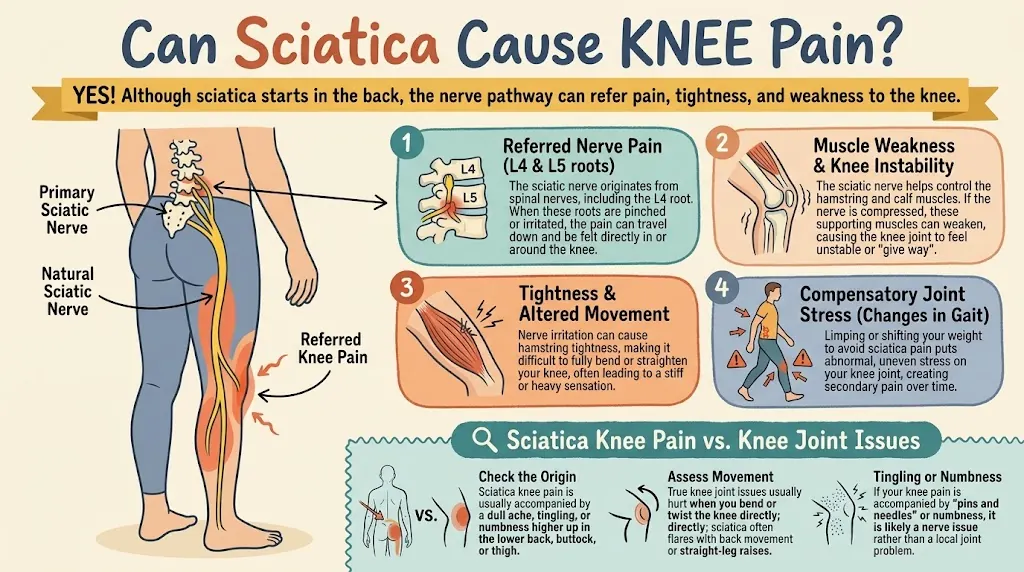
Sciatica describes pain associated with irritation or compression of the sciatic nerve or its contributing nerve roots, usually in the lower spine. These nerves carry sensory and motor signals through the buttock and down the leg. When a nerve root becomes irritated, pain can travel along its distribution and sometimes be felt around the knee.
Common causes include a herniated disc, age-related spinal changes, and narrowing around the spinal nerves. A clinician may also consider other sources of nerve irritation depending on the symptoms and examination findings.
Pain around the knee can occur with nerve-root irritation affecting the upper or lower portions of the sciatic nerve pathway. However, pain at the front of the knee is not specific to sciatica, and symptoms limited to the knee may be more consistent with a local joint or soft-tissue problem.
For more background, see what causes sciatica and sciatic nerve pain and what a herniated disc feels like.
What Does Sciatica-Related Knee Pain Feel Like?
Sciatica-related knee pain may occur alongside other symptoms that extend beyond the knee. These can include:
-
Sharp, shooting, burning, or electric-like pain traveling down the leg.
-
Pain beginning in the lower back or buttock and extending toward the knee.
-
Tingling or pins-and-needles sensations in the thigh, calf, or foot.
-
Numbness or altered sensation in part of the leg.
-
Symptoms that change with sitting, bending, walking, or certain spinal positions.
-
Weakness affecting the leg or difficulty controlling normal movements.
Not everyone experiences every symptom. Some people have little back pain, while others notice discomfort mainly in the buttock or leg.
If your symptoms extend farther down the leg, compare them with sciatica symptoms affecting the calf, foot pain caused by sciatica, and leg tingling associated with sciatica.
Sciatica vs. Knee Joint Pain: What Is the Difference?
The main difference is that sciatica involves nerve-related pain, while knee conditions usually affect the joint or surrounding tissues. Symptoms can overlap, so these clues cannot confirm a diagnosis on their own.
| Feature | Possible sciatica | Possible knee problem |
|---|---|---|
| Pain location | May travel from the back or buttock toward the knee | Often concentrated in or around the knee |
| Pain quality | Burning, shooting, electric, or aching | Aching, sharp, stiff, or tender |
| Tingling or numbness | May occur in the leg or foot | Less typical of an isolated knee condition |
| Knee swelling | Not a typical feature of sciatica | May occur with inflammation or injury |
| Effect of movement | May change with sitting, bending, or spinal position | May worsen with stairs, squatting, or bending the knee |
For example, pain that travels from the buttock down the leg with tingling may suggest nerve irritation. Pain with a swollen knee after twisting it may point toward a local injury instead.
Can Sciatica Cause Pain Behind or Around the Knee?
Yes, nerve-related pain can reach the back of the knee or extend toward the lower leg. The exact location depends on which nerve roots are affected and how symptoms travel. Pain around the kneecap alone is less specific and should not automatically be attributed to sciatica.
Other possible causes include lower back pain that spreads into the hip, lower back pain with buttock pain, and leg pain caused by a herniated disc even without back pain.
What Makes Sciatica-Related Knee Pain Worse?
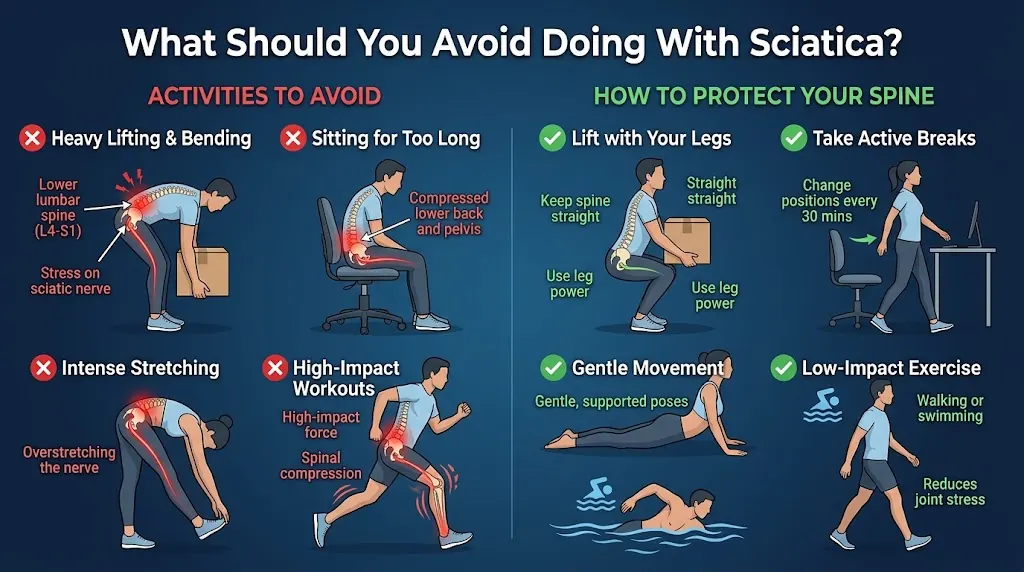
Symptoms may become more noticeable after prolonged sitting, repeated bending, lifting, or movements that irritate an affected nerve. Some people also experience pain when coughing or sneezing. Others find that walking or standing for extended periods increases discomfort.
Pay attention to the activities that trigger your symptoms rather than assuming one movement is always harmful.
| Activity | What you can try |
|---|---|
| Sitting for a long time | Change positions regularly and take short movement breaks |
| Walking | Try shorter, comfortable walks instead of pushing through worsening pain |
| Bending or lifting | Keep loads close to your body and avoid movements that sharply increase symptoms |
| Sleeping | Experiment with a comfortable side-lying or back-lying position |
| Exercise | Use gentle movements that do not increase radiating pain, tingling, or weakness |
If symptoms worsen at particular times, it may help to understand why sciatica is worse at night or why sciatica may feel worse in the morning.
How Can You Relieve Sciatica-Related Knee Pain at Home?
For mild symptoms without warning signs, gentle movement and changes to daily activities may help. The goal is to remain active without repeatedly aggravating the affected nerve.
-
Keep moving within your limits. Short walks and frequent position changes may be more comfortable than prolonged bed rest.
-
Try heat or cold. Apply a wrapped cold pack or a comfortably warm pack for about 15–20 minutes. Avoid direct skin contact and stop if your skin becomes irritated.
-
Avoid aggressive stretching. Stop any movement that increases shooting pain, numbness, tingling, or weakness.
-
Adjust your sleeping position. Use pillows to support your legs and reduce uncomfortable twisting.
-
Review medication safety. Over-the-counter pain relievers may help some people, but anti-inflammatory medicines can be unsuitable for people with kidney disease, stomach ulcers, certain cardiovascular conditions, or those taking blood thinners. Ask a clinician or pharmacist if you are unsure.
For practical guidance, explore how to sleep with sciatica, which activities to avoid with sciatica, exercises for lower back pain, and how to relieve back pain at home.
Does Sciatica-Related Knee Pain Need Physical Therapy?
Physical therapy may help when nerve-related pain interferes with walking, bending, or everyday activities. A physical therapist can assess mobility, strength, and nerve-related symptoms before recommending an individualized exercise program.
A clinician may also evaluate whether the pain comes from the spine, knee, hip, or another structure. Imaging is not routinely necessary for every case of sciatica; it may be considered when symptoms persist, become severe, or suggest a more serious problem.
How Long Does Sciatica-Related Knee Pain Last?
Recovery depends on the underlying cause, symptom severity, and whether nerve compression or irritation continues. Many cases improve over several weeks, although some take months or recur.
| Time frame | What may happen |
|---|---|
| First few days | Pain may fluctuate with activity and position |
| Several weeks | Symptoms may gradually improve with appropriate care |
| Beyond several weeks | Persistent or worsening symptoms warrant clinical assessment |
| Any time | New weakness or bladder or bowel changes require urgent attention |
There is no reliable timeline for an individual without knowing the cause. If pain continues, ask about how long a herniated disc takes to heal and when you should see a doctor for lower back pain.
Warning Signs: When Should You Seek Medical Care?
Symptoms that may be monitored: Mild, stable discomfort without weakness, significant swelling, or other concerning symptoms may be monitored briefly while using gentle self-care.
Arrange a medical evaluation: Seek assessment if knee or leg pain persists, worsens, disrupts sleep, limits walking, or comes with ongoing numbness or tingling. A hot, red, swollen knee or inability to bear weight also needs prompt evaluation.
Seek emergency care: New loss of bladder or bowel control, difficulty urinating, numbness around the groin or inner thighs, or rapidly worsening leg weakness may indicate serious nerve compression. Do not wait for these symptoms to resolve on their own.
Review when back pain is an emergency if you are unsure whether accompanying back and leg symptoms require immediate attention.
Frequently Asked Questions
1. Can sciatica cause knee pain without back pain?
Yes. Nerve-related leg pain can occur even when lower back pain is mild or absent. However, knee pain alone does not establish that sciatica is the cause.
2. Can sciatica affect just one knee?
Yes. Sciatica commonly affects one side of the body, so symptoms may extend toward one knee. Persistent one-sided knee pain still deserves assessment if the cause is unclear.
3. Can sciatica cause pain behind the knee?
It can. Pain may travel down the back of the thigh toward the knee, sometimes continuing into the calf.
4. Can sciatica cause knee weakness?
Nerve compression can affect muscles involved in leg movement, potentially causing weakness. New or progressive weakness needs prompt medical assessment.
5. Can a herniated disc cause knee pain?
Yes. A herniated disc can irritate nerve roots that contribute to pain traveling down the leg. Examination is needed to determine whether the disc is responsible.
6. Is walking good for sciatica-related knee pain?
Gentle walking may help maintain mobility when tolerated. Reduce the distance or stop if walking substantially increases radiating pain, numbness, or weakness.
7. Should I stretch if sciatica hurts my knee?
Gentle, appropriate stretches may help some people, but not every stretch is suitable for every cause of sciatica. Avoid forcing movements that increase nerve-related symptoms.
8. Can sciatica cause knee swelling?
Knee swelling is not a typical symptom of sciatica. Swelling, warmth, or redness may indicate a separate knee problem that needs evaluation.
9. Does sciatica-related knee pain go away on its own?
Many cases improve over several weeks, but recovery varies. Persistent or worsening symptoms should be assessed rather than assumed to be harmless.
10. How do doctors determine whether knee pain comes from sciatica?
A clinician reviews your symptoms and examines your back, hip, knee, strength, reflexes, and sensation. Imaging or other tests may be appropriate when the findings suggest a need for further investigation.
Conclusion
Sciatica can cause pain that travels toward the knee, particularly when nerve irritation originates in the lower spine. Pain accompanied by tingling, numbness, or symptoms extending down the leg may support a nerve-related cause, while isolated knee pain or swelling may suggest another condition.
Start with gentle movement and comfortable activity adjustments if symptoms are mild. Arrange a clinical assessment if pain persists or limits daily activities, and seek emergency care for bladder or bowel changes, groin numbness, or rapidly worsening weakness.
Disclaimer: This article is provided for educational and informational purposes only.