Sciatica that gets worse at night does not automatically mean your condition is becoming more serious. Changes in position, pressure on sensitive nerves, prolonged inactivity, and increased awareness of pain in a quiet environment may all contribute. However, persistent or progressive nighttime pain, especially with other symptoms, should not be ignored.
Understanding why sciatica is worse at night can help you choose a more comfortable sleeping position, adjust your evening routine, and recognize when medical evaluation is needed. The right approach depends on what is irritating the sciatic nerve and whether your symptoms are improving, staying the same, or getting worse.
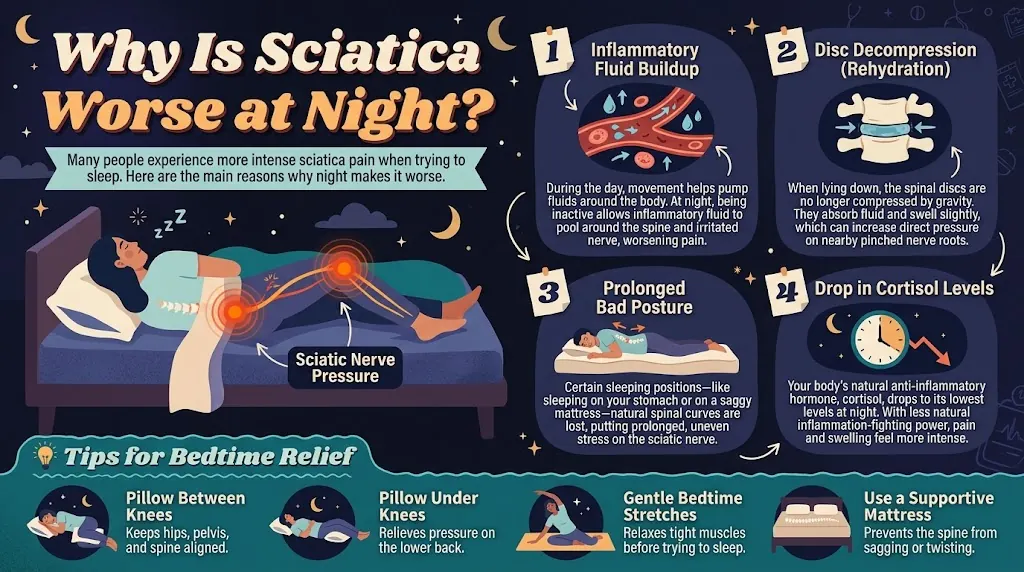
Why Is Sciatica Worse at Night?
Sciatica is a pattern of pain caused by irritation or compression of nerve roots that contribute to the sciatic nerve. It commonly affects one side of the body, traveling from the lower back or buttock into the thigh, calf, or foot.
Nighttime symptoms can become more noticeable for several reasons:
-
Sleeping position: Certain positions may increase pressure on sensitive nerve roots or stretch irritated tissues.
-
Prolonged inactivity: Remaining in one position for hours can increase stiffness and make the first movements uncomfortable.
-
Mattress support: A mattress that allows excessive sinking or feels too firm may aggravate existing back or hip discomfort.
-
Daytime activity: Long periods of sitting, driving, bending, or lifting may contribute to symptoms that become more noticeable at bedtime.
-
Greater awareness of pain: When distractions decrease at night, existing discomfort may feel more prominent.
Sciatica can also occur alongside conditions such as a herniated disc or spinal stenosis. Understanding the common causes of sciatica may help explain why certain movements or positions trigger symptoms, but nighttime pain alone cannot identify the underlying cause.
What Is the Best Sleeping Position for Nighttime Sciatica?
The best sleeping position is the one that reduces leg pain without forcing your lower back or hips into an uncomfortable position. There is no single position that works for everyone.
Common sleeping positions to try
| Sleeping position | How to try it | What to watch for |
|---|---|---|
| On your side | Place a pillow between your knees and keep your hips aligned. | Avoid twisting your waist or pulling your knees tightly toward your chest. |
| On your back | Put a pillow under your knees to reduce strain on your lower back. | Adjust the pillow height if your back feels more arched or painful. |
| Slightly reclined | Use an adjustable bed or supportive recliner for a short-term trial. | Avoid remaining in one position all night if it increases stiffness. |
| On your stomach | Try another position first if this causes your back to arch. | Stop if it increases back or leg pain. |
For more guidance, see these sleeping positions for lower back pain and tips on how to sleep with sciatica.
A useful rule is to choose the position that reduces symptoms in your leg, not just discomfort in your back. If pain travels farther down the leg or numbness increases, change positions.
How Can You Relieve Sciatica Before Bed?
A few adjustments to your evening routine may help reduce discomfort and make it easier to settle down.
-
Apply gentle heat. A warm pack may relax tense muscles and provide temporary relief. Wrap it in a towel, follow the product instructions, and avoid sleeping with a heating pad switched on.
-
Move gently before bed. Try a short, comfortable walk around your home instead of remaining seated for hours. Stop movements that cause sharp pain or worsening tingling.
-
Reduce prolonged sitting. Take movement breaks during the evening, particularly after driving or working at a desk.
-
Use pillows for support. Adjust your sleeping position gradually rather than forcing your body into a stretch.
-
Keep your routine comfortable. Allow time to unwind, and avoid repeatedly testing painful movements to see whether your symptoms have improved.
For additional options, explore ways to relieve back pain at home, heat or ice for back pain, and exercises for lower back pain.
What Does Research Say About Rest and Movement?
Evidence does not support prolonged bed rest as a general treatment for back pain. A Cochrane review combining 10 randomized trials involving 1,923 participants found small benefits from staying active rather than receiving bed-rest advice for acute lower back pain, although differences for sciatica specifically were limited or uncertain.
Clinical guidance also recommends adapting activity to a person’s symptoms and abilities instead of relying on extended inactivity
| Approach | Potential benefit | Limitation |
|---|---|---|
| Brief, gentle movement | May reduce stiffness and maintain everyday function. | Pushing through worsening nerve symptoms can aggravate pain. |
| Short periods of rest | May help during a painful flare. | Prolonged bed rest can contribute to stiffness and reduced conditioning. |
| Gentle heat | May provide temporary comfort. | It does not remove the underlying cause of nerve irritation. |
If an activity repeatedly worsens symptoms, modify it rather than assuming more movement is always better. Avoid aggressive stretching or exercises that send pain farther down your leg.
Could Your Mattress or Daily Habits Be Making Sciatica Worse?
Your sleeping surface and daytime habits may affect comfort, but neither can establish the cause of sciatica.
A mattress that feels excessively soft or firm may make it harder to find a comfortable position. Rather than immediately replacing it, first try adjusting pillow support and noticing whether a particular position consistently aggravates symptoms. Guidance on choosing a mattress for back pain can help you assess comfort and support.
Also pay attention to daytime triggers:
-
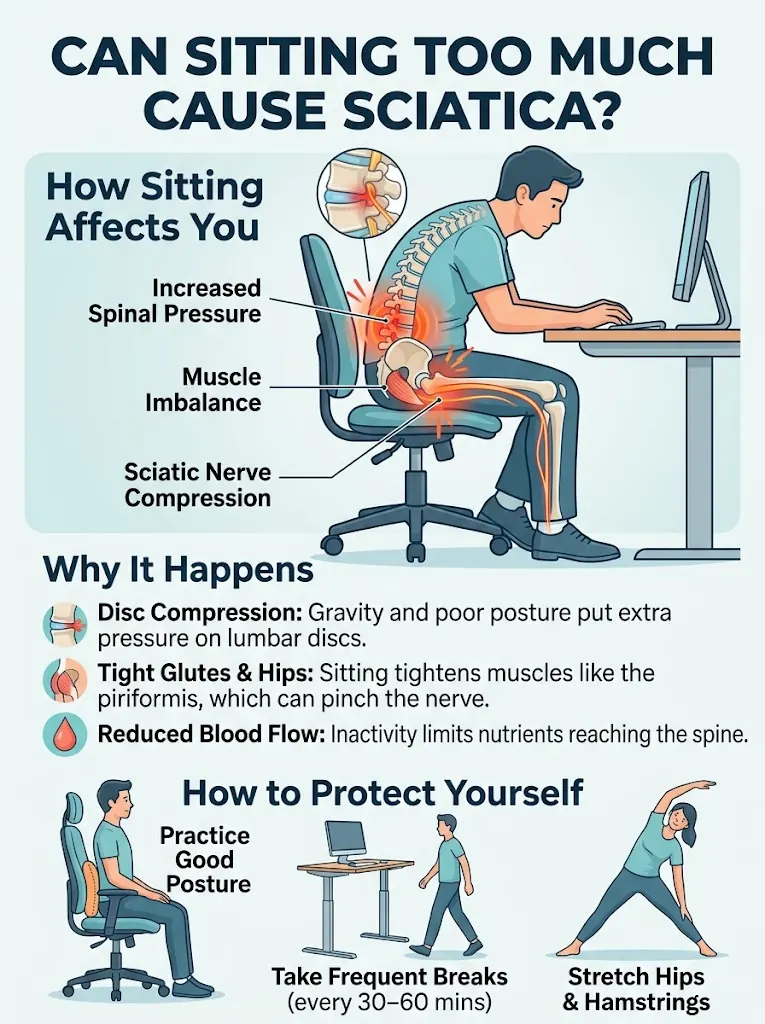
Sitting for long periods may aggravate symptoms in some people. See whether sitting too much can cause sciatica.
-
Stress and poor sleep may intensify the experience of pain, even when they are not the underlying cause.
-
Repeated bending, heavy lifting, or strenuous activity may aggravate irritated tissues.
Understanding what to avoid doing with sciatica can help you adjust activities without unnecessarily restricting normal movement.
When Is Nighttime Sciatica a Warning Sign?
Nighttime pain can occur with ordinary sciatica, but pain that is persistent, unexplained, or progressively worsening deserves medical attention. The pattern of symptoms matters more than the time of day alone.
| Symptom pattern | What to do |
|---|---|
| Mild pain that improves when you change position | Monitor symptoms and use comfortable, gentle self-care. |
| Pain that repeatedly disrupts sleep or interferes with daily activities | Arrange a medical evaluation, especially if it is worsening or not improving. |
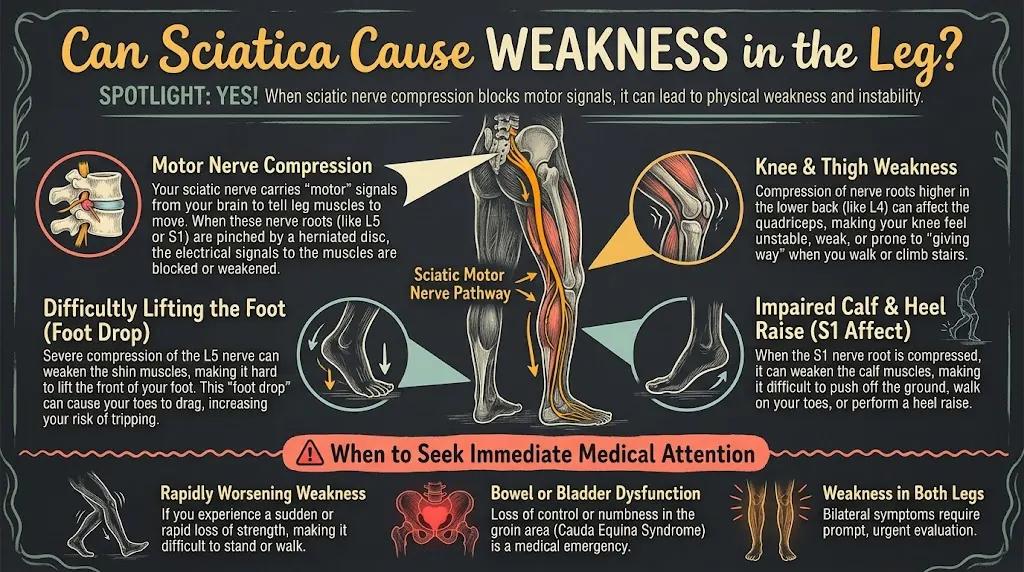
| New or increasing leg weakness, persistent numbness, or difficulty walking | Seek prompt medical assessment. |
| New loss of bladder or bowel control, inability to urinate, or numbness around the groin or buttocks | Seek emergency care immediately. |
Do not wait until morning if you develop emergency warning signs. New sciatica symptoms in both legs, rapidly worsening weakness, or loss of sensation around the genital or anal area can indicate serious nerve compression
Persistent nighttime pain accompanied by fever, unexplained weight loss, a history of cancer, or recent significant trauma also warrants prompt clinical assessment. These symptoms do not automatically mean a serious condition is present, but they should not be dismissed.
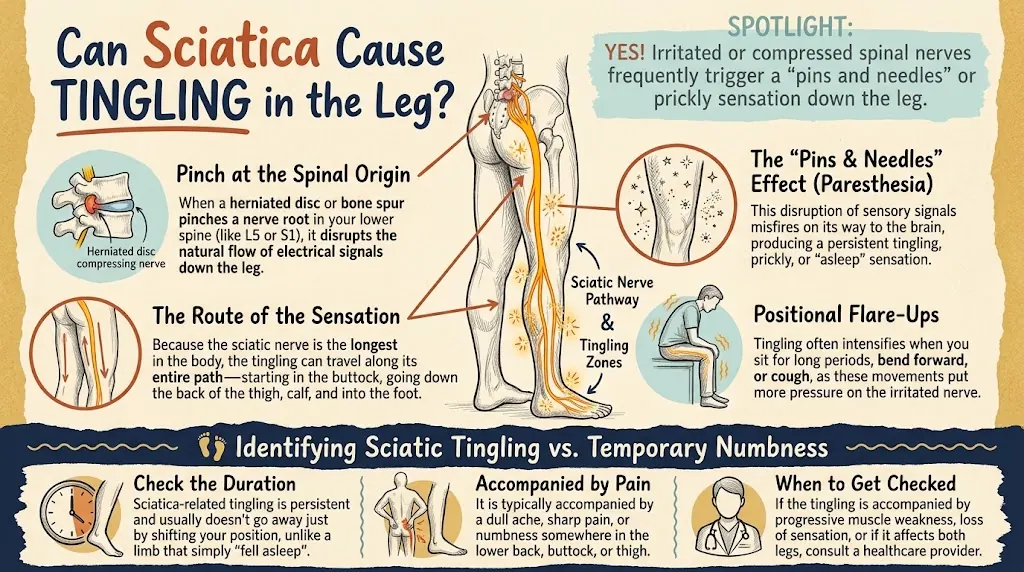
If you notice numbness in your foot from sciatica or leg weakness associated with sciatica, tell a healthcare professional whether the symptoms are new, spreading, or becoming more severe.
How Long Can Nighttime Sciatica Last?
Sciatica may improve over several weeks, but recovery varies with the cause, severity, and presence of nerve-related symptoms. Some people improve gradually with conservative care, while others need further evaluation or treatment.
Keep track of how often pain wakes you, which positions help, and whether symptoms are changing. Arrange an appointment if pain is getting worse, repeatedly disturbing your sleep, limiting normal activities, or failing to improve after a few weeks of home care.
A clinician may assess your strength, sensation, reflexes, and movement. Imaging is not routinely necessary for every episode; it may be considered when the findings could change treatment or when concerning symptoms suggest a more serious cause.
For guidance on next steps, review when to see a doctor for lower back pain and how long lower back pain is too long to have.
Frequently Asked Questions
1. Why does sciatica hurt more when I lie down?
Lying down can place your lower back and hips in positions that aggravate sensitive nerve roots or surrounding tissues. The effect depends on your condition and sleeping posture.
2. Is nighttime sciatica a sign of nerve damage?
Not necessarily. Pain that is worse at night does not prove nerve damage, but new weakness, progressive numbness, or loss of bladder or bowel control requires urgent assessment.
3. Should I sleep on the painful side or the opposite side?
Try the opposite side with a pillow between your knees, or sleep on your back with support under your knees. Choose the position that reduces symptoms rather than following a rigid rule.
4. Is walking before bed good for sciatica?
A short, gentle walk may reduce stiffness and help you remain active. Stop or adjust your activity if it increases leg pain, numbness, or weakness.
5. Can stress make sciatica worse at night?
Stress can increase muscle tension and make pain harder to manage, while poor sleep can increase pain sensitivity. Stress alone does not establish why the sciatic nerve is irritated.
6. Should I use heat or ice before sleeping?
Either may provide temporary comfort, depending on what feels better. Protect your skin and never fall asleep with a heating pad or ice pack applied directly to it.
7. Can a mattress cause nighttime sciatica?
A mattress may affect comfort and spinal positioning, but it is not necessarily the underlying cause of sciatica. Try adjusting your sleep position and pillow support before deciding whether to replace it.
8. Why is my sciatica worse in the morning too?
Stiffness after remaining in one position overnight may make the first movements uncomfortable. If morning symptoms persist or worsen, discuss them with a clinician; reasons sciatica may hurt in the morning can help you understand possible triggers.
9. Can I take medication to sleep through sciatica pain?
Ask a clinician or pharmacist about suitable options, especially if you have other medical conditions or take other medicines. Some drugs commonly used for nerve pain have limited evidence of benefit for sciatica and can cause harm, so do not start or combine medications without appropriate advice.
10. When should I go to the emergency room for sciatica?
Seek emergency care for new bladder retention or incontinence, loss of bowel control, numbness around the groin or buttocks, or severe or rapidly worsening weakness. These symptoms may indicate serious nerve compression that needs immediate treatment.
The Bottom Line
Sciatica that worsens at night may be related to sleeping position, prolonged inactivity, or nerve irritation. Try supported sleeping positions, gentle movement, and safe heat therapy, while tracking changes in pain and sensation. If symptoms persist or interfere with sleep, arrange a medical evaluation rather than relying on home care indefinitely.
Recognizing the early signs of sciatica, understanding sciatica pain when walking, and knowing when back pain is an emergency can help you choose an appropriate next step. If symptoms continue, discuss whether physical therapy can help lower back pain and whether your symptoms warrant further investigation.
Disclaimer: This article is provided for educational and informational purposes only.