Nighttime back pain does not automatically mean something serious is wrong. Muscle strain, joint irritation, and sleeping posture are common possibilities, but persistent pain, pain that repeatedly interrupts sleep, or symptoms accompanied by fever or unexplained weight loss deserve medical attention.
Understanding why your lower back hurts more at night can help you identify possible triggers, make sleep more comfortable, and recognize when it is time to seek medical care. The cause cannot be determined by the timing of pain alone.
What Causes Lower Back Pain That Gets Worse at Night?
Lower back pain may become more noticeable at night because of prolonged positioning, reduced movement, or an underlying condition that needs evaluation. Several causes can produce similar symptoms.
| Possible cause | What you may notice | Helpful clue |
|---|---|---|
| Muscle strain | Aching, tightness, or soreness | Pain began after lifting, exercise, or bending |
| Joint or disc irritation | Stiffness or pain with certain movements | Turning or changing positions aggravates symptoms |
| Spinal arthritis | Aching and stiffness | Symptoms may change with activity and rest |
| Nerve irritation | Burning, tingling, or pain down a leg | Symptoms may extend beyond the lower back |
| Other medical conditions | Persistent or unusual pain | Additional symptoms may require assessment |
1. Muscle strain and daytime activity
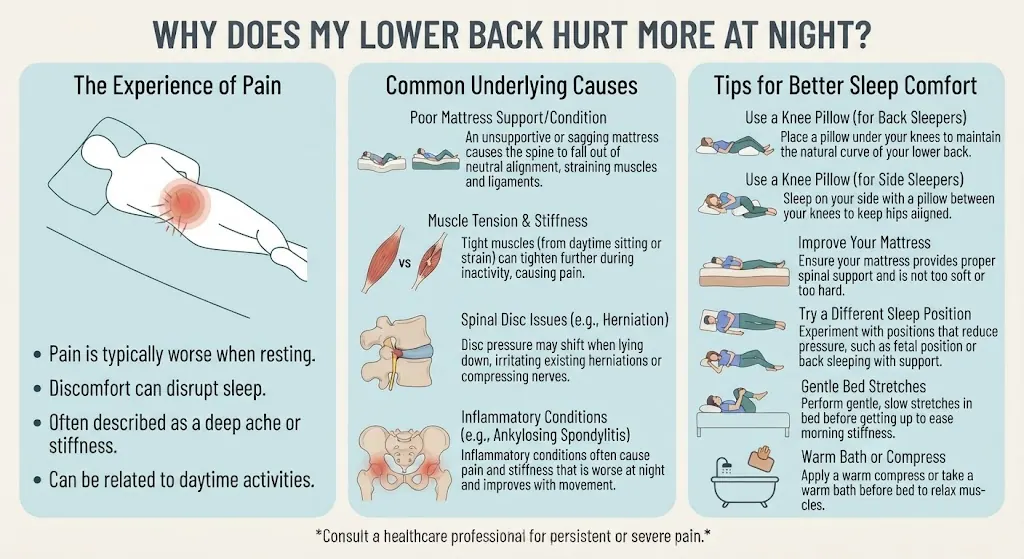
The muscles and ligaments supporting your spine can become irritated after lifting, prolonged standing, exercise, or repetitive bending. You may notice the discomfort more when you finally stop moving at night.
A strain is more likely when pain follows a specific activity and changes with movement. However, symptoms alone cannot confirm a muscle injury. For broader possibilities, see what causes back pain.
2. Sleeping position and mattress support
A position that keeps your lower back twisted or excessively arched may aggravate existing discomfort. An unsuitable mattress can also make it harder to find a comfortable position, although mattress firmness alone does not establish the cause of pain.
If discomfort mainly begins after lying down, review the best sleeping positions for lower back pain and consider whether your mattress allows you to rest without increasing symptoms.
3. Spinal arthritis or disc-related problems
Age-related changes in spinal joints and discs can contribute to lower back pain. Some people experience stiffness after resting, while others have pain with bending, twisting, or prolonged positions.
Explore how spinal arthritis can cause lower back pain or what a herniated disc may feel like for more detail. These conditions cannot be diagnosed from nighttime pain alone.
4. Nerve irritation
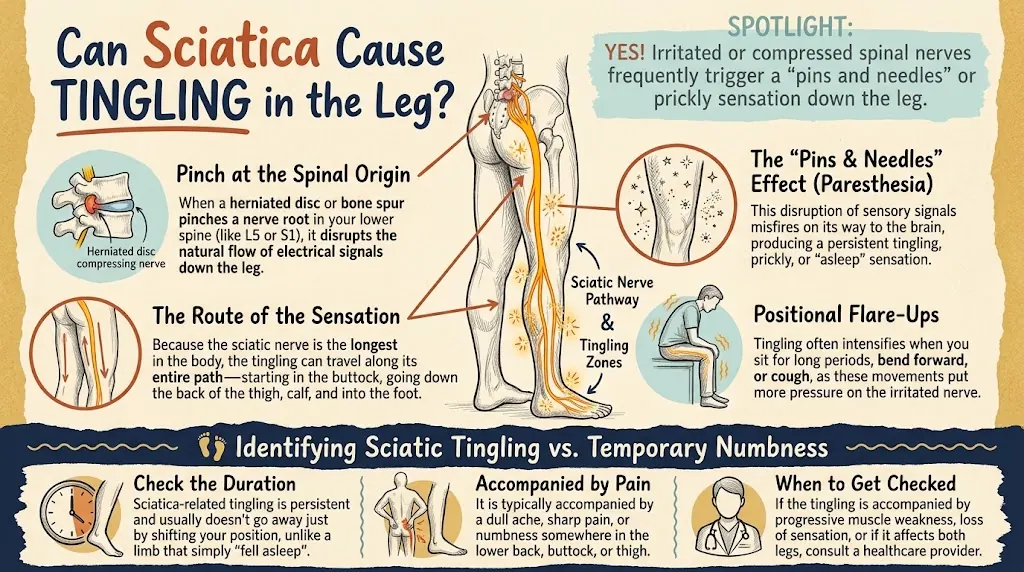
Pain that travels from the lower back into the buttock or leg, especially with tingling or numbness, may involve an irritated nerve. Symptoms can change with sitting, lying down, or changing position.
Learn about the first signs of sciatica if your discomfort extends down a leg. New or worsening weakness requires prompt medical assessment.
Why Does Back Pain Feel Worse When I Lie Down?
Pain may become more noticeable when you are still because there are fewer distractions and less movement. Certain positions can also increase pressure on sensitive muscles, joints, or nerves.
| Pattern | Possible explanation | What to consider |
|---|---|---|
| Pain after lying still | Stiffness or position-related irritation | Change position gently |
| Pain when turning over | Sensitive muscles or joints | Avoid sudden twisting |
| Pain with leg symptoms | Possible nerve involvement | Arrange an assessment if persistent or worsening |
| Severe pain regardless of position | Several causes are possible | Seek medical evaluation, especially with warning signs |
If your back hurts specifically when you lie flat, read about lower back pain when lying down. If turning in bed triggers discomfort, lower back pain when turning over in bed may be more relevant.
How Can You Relieve Lower Back Pain at Night?
The goal is to reduce aggravating positions while maintaining comfortable movement during the day.
-
Adjust your sleeping position. Try lying on your side with a pillow between your knees, or on your back with a pillow beneath your knees.
-
Use gentle movement. A short walk or comfortable mobility exercises may help reduce stiffness. Stop movements that cause sharp or spreading pain.
-
Try heat or cold. A wrapped cold pack may help after a recent strain; gentle heat may ease muscle tightness. Protect your skin and avoid sleeping on a heating pad.
-
Avoid prolonged bed rest. Change positions regularly and continue ordinary activities as tolerated rather than staying in bed all day.
-
Review daytime triggers. Heavy lifting, repetitive bending, and prolonged standing may contribute to nighttime discomfort.
For additional options, see how to relieve back pain at home. If movement seems to aggravate symptoms, exercises for lower back pain should be adapted to your comfort and ability.
When Should You Seek Medical Care?
Nighttime pain is not automatically an emergency, but persistent or unexplained symptoms should not be ignored.
| Level of concern | Warning signs | Recommended action |
|---|---|---|
| Monitor briefly | Mild pain after activity that improves with rest or gentle movement | Adjust activities and monitor changes |
| Arrange medical evaluation | Pain repeatedly disrupts sleep, persists, worsens, or occurs with unexplained weight loss or fever | Contact a healthcare professional promptly |
| Seek emergency care | New loss of bladder or bowel control, difficulty urinating with back symptoms, numbness around the groin, or rapidly worsening leg weakness | Go to an emergency department immediately |
Seek urgent assessment for severe back pain with fever, a history of cancer, significant trauma, or other concerning symptoms. These features do not always indicate a dangerous condition, but they warrant timely evaluation. See when back pain is an emergency.
A clinician may ask when the pain began, whether it changes with position, and whether you have leg symptoms or other health changes. A physical examination often guides the next step; imaging is not necessary for every case.
Frequently Asked Questions
1. Is lower back pain that gets worse at night always serious?
No. Muscle strain and position-related discomfort can become more noticeable at night. Persistent, unexplained, or worsening pain deserves medical evaluation.
2. Can a mattress cause lower back pain at night?
A mattress that makes it difficult to maintain a comfortable position may aggravate existing pain. However, changing mattresses will not necessarily resolve pain caused by an underlying condition.
3. What is the best sleeping position for lower back pain?
Side sleeping with a pillow between your knees or back sleeping with a pillow beneath your knees may improve comfort. Choose the position that reduces symptoms rather than forcing a particular posture.
4. Why does my back hurt when I turn over in bed?
Turning involves movement of the spine, hips, and surrounding muscles. Irritated muscles or joints may hurt during this movement, but persistent pain needs assessment.
5. Can stress make nighttime back pain feel worse?
Stress and poor sleep can influence muscle tension and pain sensitivity. They should not automatically be assumed to explain persistent or severe symptoms.
6. Should I use heat or ice before bed?
Either may help, depending on the cause and what feels comfortable. Use a protective layer, limit exposure, and never fall asleep with a heating pad or ice pack applied.
7. Is walking helpful when my back hurts at night?
Gentle walking may help some people stay mobile and reduce stiffness. Shorten your walks or stop if pain increases significantly or spreads into your legs.
8. How long should nighttime lower back pain last?
Mild activity-related pain may improve over several days, although recovery varies. Seek medical advice if pain is worsening, repeatedly disrupting sleep, or not improving over time.
9. Can lower back pain at night be caused by sciatica?
Yes, nerve irritation can cause back pain that extends into the buttock or leg and may interfere with sleep. Numbness, tingling, or weakness makes medical assessment particularly important.
10. Do I need an MRI for lower back pain that worsens at night?
Not necessarily. A clinician decides whether imaging is appropriate based on your history, examination, duration of symptoms, and warning signs.
Conclusion
Lower back pain that worsens at night can be related to muscle strain, sleeping position, joint changes, or nerve irritation. Try comfortable sleep positioning, gentle movement, and appropriate heat or cold, but arrange medical evaluation if the pain persists, worsens, or repeatedly disrupts sleep. Seek emergency care for new bladder or bowel dysfunction, groin numbness, or rapidly worsening leg weakness.
Disclaimer: This article is provided for educational and informational purposes only.