A sore back after lifting does not automatically mean you have a serious injury or a herniated disc. Muscle strain is a common explanation, but irritated joints, spinal discs, and nerves can also cause pain. The location, severity, and associated symptoms help determine whether home care is reasonable or medical evaluation is needed.
Understanding why your lower back hurts after lifting something heavy can help you choose safer ways to move, manage discomfort, and recognize warning signs. This guide explains common causes, practical recovery steps, expected healing times, and when to seek medical care.
Why Does Lifting Something Heavy Cause Lower Back Pain?
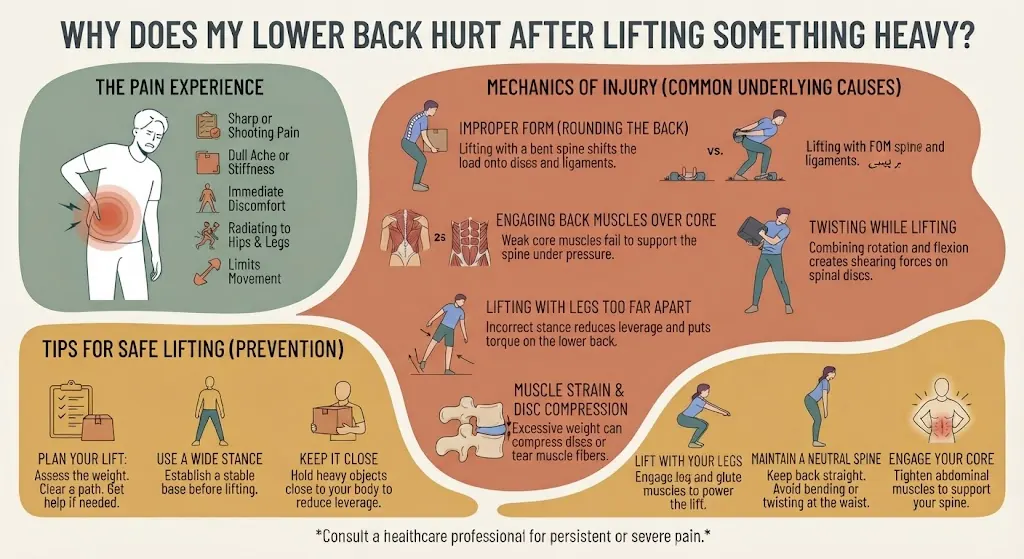
Lifting increases the demands on the muscles, ligaments, joints, and discs that support your spine. When the load is heavy, awkward, held far from your body, or lifted while twisting, these structures may become irritated or injured.
The most common possibilities include:
-
Muscle strain: Muscle fibers become overstretched or develop small tears, causing localized soreness, tenderness, stiffness, or spasms.
-
Ligament sprain: Supporting ligaments may be stretched beyond their comfortable range, producing pain with certain movements.
-
Disc irritation or herniation: A spinal disc may become irritated or protrude enough to affect a nearby nerve, sometimes causing pain that travels into the buttock or leg.
-
Joint irritation: Small joints in the spine or the sacroiliac joints near the pelvis may contribute to pain during bending, twisting, or standing.
-
Nerve irritation: When a spinal nerve is irritated or compressed, symptoms can include shooting pain, tingling, numbness, or weakness.
These causes can overlap, and symptoms alone cannot reliably identify the exact structure involved. For a broader overview, see what causes back pain and the common reasons for lower back pain.
What Does a Back Injury From Heavy Lifting Feel Like?
A lifting-related injury often causes pain that increases when you bend forward, twist, cough, or move from sitting to standing. You might notice muscle tightness, tenderness, or spasms that make your back feel temporarily locked.
The pattern can offer clues, but it cannot confirm a diagnosis.
| Symptom | Possible explanation | What to notice |
|---|---|---|
| Localized soreness and stiffness | Muscle strain or ligament sprain | Pain with bending, lifting, or changing position |
| Sharp pain during a lift | Sudden muscle or joint irritation; sometimes a more significant injury | Whether pain prevents normal movement |
| Pain traveling into the buttock or leg | Possible nerve irritation or sciatica | Whether pain extends below the knee |
| Tingling, numbness, or weakness | Possible nerve involvement | Whether symptoms are new or worsening |
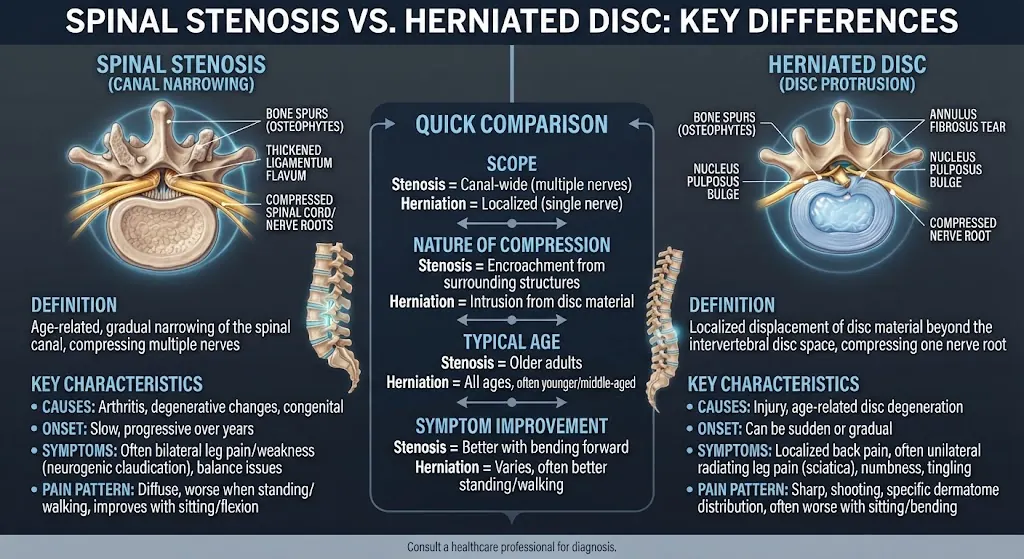
A herniated disc versus a bulging disc or muscle strain can be difficult to distinguish without an examination. A disc problem may cause symptoms associated with a herniated disc, while irritation of the sciatic nerve can produce pain extending down one leg. New leg numbness or weakness deserves particular attention.
What Should You Do Immediately After Hurting Your Back While Lifting?
If your pain started after lifting and you have no warning signs, begin with gentle self-care rather than trying to force your back to loosen up.
-
Stop heavy lifting temporarily. Avoid repeating the movement that triggered your pain, particularly if it causes sharp or increasing discomfort.
-
Keep moving gently. Take short walks and change positions regularly as tolerated. Prolonged bed rest can contribute to stiffness and slower recovery.
-
Try heat or cold. Use a wrapped cold pack or a comfortably warm heating pad for short periods. Avoid direct skin contact, excessive heat, and falling asleep with a heating pad.
-
Modify painful activities. If bending, twisting, or reaching aggravates symptoms, reduce those movements while your back settles.
-
Consider medication carefully. An over-the-counter anti-inflammatory medicine may help some adults, but it is not appropriate for everyone. Ask a pharmacist or clinician if you have kidney disease, ulcers, take blood thinners, are pregnant, or have other medical concerns.
For additional practical guidance, explore the fastest ways to relieve lower back pain, home treatment for back pain, and when to use heat or ice for back pain.
Should You Rest or Keep Moving?
Relative rest means temporarily reducing strenuous activity without avoiding all movement. Continue ordinary activities that feel manageable, but do not push through severe pain or new neurological symptoms.
| Activity | General recommendation |
|---|---|
| Short, comfortable walks | Usually reasonable if symptoms do not worsen |
| Gentle daily activities | Continue as tolerated |
| Heavy lifting and loaded twisting | Temporarily avoid if painful |
| Aggressive stretching or painful exercises | Stop and reassess |
| Extended bed rest | Generally avoid unless specifically advised by a clinician |
As symptoms improve, appropriate exercises for lower back pain may help restore movement. Avoid exercises that can aggravate lower back pain until you can perform them comfortably and safely.
How Long Does Lower Back Pain After Lifting Last?
Many uncomplicated lifting-related back injuries begin improving within days and recover over several weeks. The timeline depends on the severity of the injury, your general health, and whether you continue activities that aggravate it.
| Recovery stage | What you may notice | Practical next step |
|---|---|---|
| First few days | Pain, stiffness, or muscle spasms | Reduce heavy activity and maintain comfortable movement |
| First 1–2 weeks | Gradual improvement in movement and daily function | Increase activity slowly as tolerated |
| Following several weeks | Continued improvement, although occasional soreness may remain | Progress toward normal activities without sudden increases in load |
| Persistent or worsening symptoms | Little improvement or difficulty functioning | Arrange a clinical assessment |
These are general patterns, not guaranteed deadlines. Guidance for acute low back pain emphasizes activity, symptom management, and reassessment rather than assuming every injury follows the same course. If you are unsure how long lower back pain should last, seek advice if symptoms persist, worsen, or interfere substantially with daily life.
When Should You Seek Medical Care?
Symptoms you can usually monitor
Mild or moderate localized soreness that gradually improves, without numbness, weakness, fever, or other concerning symptoms, can often be managed initially at home.
Symptoms that need prompt medical evaluation
Contact a healthcare professional if pain is severe, continues to worsen, is not beginning to improve after one to two weeks, or repeatedly prevents normal activities. Seek evaluation sooner if you have osteoporosis, a history of cancer, immune suppression, or prolonged corticosteroid use.
Pain traveling down a leg, especially with lower back pain and leg numbness, may indicate nerve involvement. A clinician can assess whether further testing or treatment is appropriate.
Symptoms requiring emergency care
Seek emergency medical attention for:
-
New difficulty urinating, loss of bladder or bowel control, or numbness around the groin or buttocks.
-
New or rapidly worsening leg weakness, particularly in both legs.
-
Severe back pain following a major accident or injury.
-
Back pain accompanied by fever and serious illness, or severe abdominal pain with faintness.
These symptoms can indicate conditions requiring urgent treatment. Review when back pain is an emergency if you are uncertain about the seriousness of your symptoms.
Do You Need an MRI After Lifting Something Heavy?
Usually, an MRI is not the first step for uncomplicated lower back pain without warning signs. A clinician will generally review your symptoms, medical history, and physical examination before deciding whether imaging is necessary.
Imaging may be appropriate when there is concern about a fracture, significant nerve compression, infection, or another serious condition. Persistent symptoms may also warrant further evaluation depending on the findings.
If you are wondering whether lower back pain needs an MRI, remember that imaging findings do not always explain the amount of pain someone experiences.
How Can You Prevent Back Pain When Lifting Again?
Once symptoms have improved, return to lifting gradually instead of immediately attempting your previous workload.
-
Stand close to the object with your feet positioned for balance.
-
Bend your hips and knees as needed to reach the load comfortably.
-
Keep the object close to your body.
-
Lift smoothly without jerking or twisting your trunk under load.
-
Divide heavy loads into smaller portions or ask for help with bulky objects.
-
Build strength progressively through regular activity and appropriate exercises.
A safe lower-back strengthening routine may support long-term function. If an injury has limited your activity, follow a gradual return-to-exercise plan after a back injury. If lifting repeatedly triggers pain or you suspect a pinched nerve in your lower back, arrange an assessment before increasing your training demands.
Frequently Asked Questions
1. Can lifting something heavy cause a pulled back muscle?
Yes. Heavy or awkward lifting can strain muscles and supporting ligaments, causing soreness, stiffness, and spasms. However, other injuries can produce similar symptoms.
2. Why did my back hurt suddenly while lifting?
Sudden pain can occur when a muscle, ligament, joint, or disc becomes irritated during a lift. The timing alone cannot establish which structure is responsible.
3. Can lifting a heavy object cause a herniated disc?
It can contribute to a disc injury, although disc changes may develop over time and may exist without symptoms. Pain, tingling, or weakness traveling into a leg warrants assessment.
4. Should I use heat or ice for a pulled back muscle?
Either may provide short-term relief. Choose the option that feels more comfortable, protect your skin, and avoid prolonged exposure.
5. Is walking good for lower back pain after lifting?
Gentle walking is often helpful because it maintains movement without heavy loading. Shorten your walks or stop if symptoms significantly increase.
6. Should I stretch my back after lifting something heavy?
Not necessarily. Avoid forceful stretching immediately after an injury, particularly if it causes sharp pain or symptoms traveling down your leg.
7. Can back pain from lifting start the next day?
Yes. Soreness and stiffness can develop several hours after physical exertion. Delayed pain does not, by itself, reveal how serious an injury is.
8. When should I see a doctor for lifting-related back pain?
Seek care if pain is severe, worsening, not improving, or interfering with normal activities. New bladder or bowel changes, groin numbness, or rapidly worsening weakness require emergency evaluation.
9. Do I need an X-ray or MRI for back pain after lifting?
Not usually when symptoms are uncomplicated and there are no warning signs. A clinician determines whether imaging is needed based on the examination and risk factors.
10. How can I avoid hurting my back when lifting again?
Keep loads close, lift smoothly, avoid twisting under heavy loads, and ask for help with awkward objects. Resume heavier lifting gradually after your symptoms improve.
The Bottom Line
Lower back pain after lifting something heavy often results from muscle or ligament strain, but disc and nerve problems are also possible. Reduce aggravating activities, maintain comfortable movement, and use heat or cold if helpful. Seek medical advice when symptoms persist or worsen, and obtain emergency care for serious neurological warning signs.
Disclaimer: This article is provided for educational and informational purposes only.