Lower back pain after gardening is common and often relates to muscle fatigue, overuse, or strain. However, not every episode of back pain has the same cause. Pain that travels down a leg, causes numbness, or persists despite modifying your activities may need medical evaluation rather than simply more stretching or rest.
Understanding why your lower back hurts after gardening can help you choose safer ways to relieve discomfort, recognize which movements may aggravate it, and return to gardening gradually. The right approach depends on how the pain started, what makes it worse, and whether you have any warning signs.
Why Does Gardening Cause Lower Back Pain?
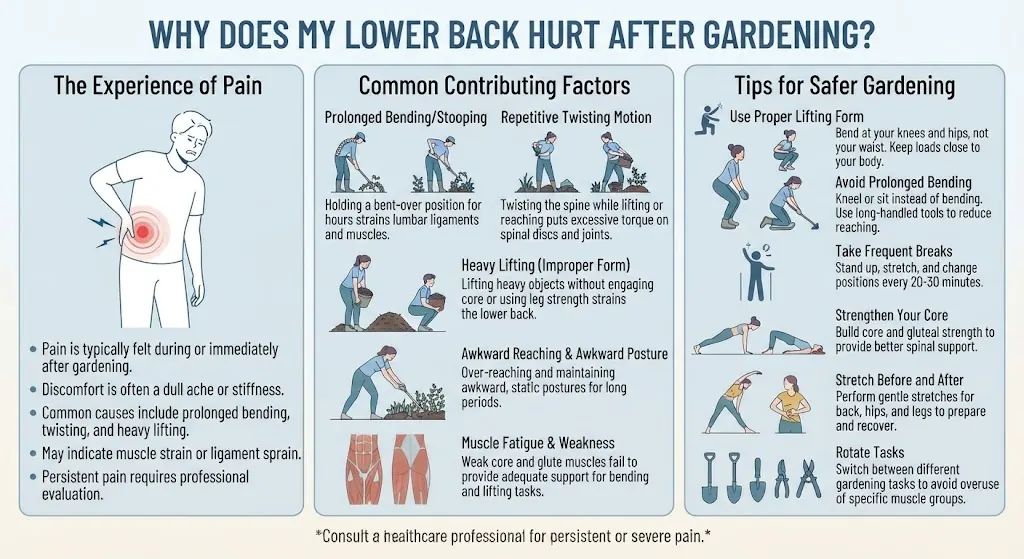
Gardening combines several movements that can place repeated demands on the lumbar spine, the lower portion of your back. Bending forward to pull weeds, twisting while digging, lifting planters, and carrying compost can fatigue muscles and irritate sensitive tissues.
One common explanation is a lower back muscle strain, which occurs when muscle fibers are overstretched or overloaded. You may notice soreness, tightness, tenderness, or muscle spasms that become more noticeable when bending, lifting, or changing positions.
Other possible causes include irritation of spinal joints, age-related disc changes, or nerve irritation. Gardening may aggravate an existing condition without being the original cause. Symptoms alone cannot reliably identify which structure is responsible.
Common gardening activities and their effects
| Gardening activity | Why it may trigger pain | What may help |
|---|---|---|
| Pulling weeds while bent forward | Sustained bending fatigues back muscles | Use a low stool or kneeling pad and change positions |
| Digging or turning soil | Repeated force and twisting increase physical demands | Take smaller scoops and turn your feet instead of twisting your trunk |
| Lifting pots or soil bags | Heavy or awkward loads challenge the back and hips | Keep loads close and divide them into smaller portions |
| Raking or pruning | Repetitive reaching and uneven movements can cause fatigue | Alternate sides and bring tools closer to your body |
| Working on the ground for a long time | Staying in one posture can increase stiffness | Alternate between sitting, kneeling, standing, and walking |
If your discomfort also occurs during other everyday movements, such as bending forward to put on your shoes, the broader pattern may help you and your clinician understand what aggravates it.
What Does Lower Back Pain After Gardening Feel Like?
The symptoms vary depending on the cause and the amount of physical effort involved. A mild strain may cause a dull ache, tightness, or tenderness across the lower back. Bending forward, standing after kneeling, or rolling over in bed may temporarily increase discomfort.
Common patterns include:
-
Muscle soreness: Aching or tenderness that develops during gardening or several hours afterward.
-
Stiffness: Difficulty straightening up after bending or kneeling for an extended period.
-
Movement-related pain: Discomfort when twisting, lifting, or changing positions.
-
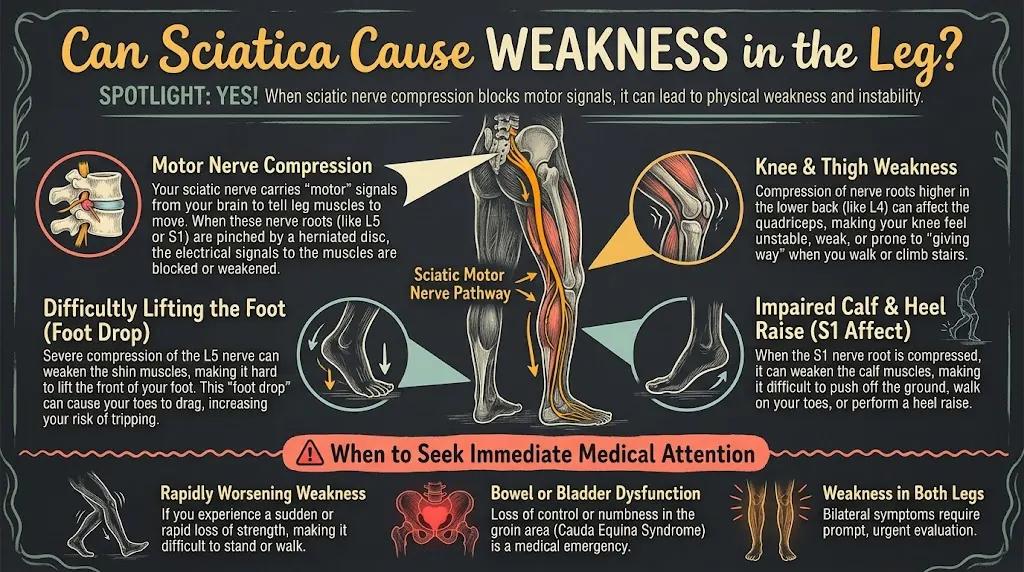
Pain spreading into the buttock or leg: This may suggest nerve irritation, particularly if accompanied by tingling, numbness, or weakness.
For example, pain that extends from your lower back into one leg may fit the pattern of sciatica symptoms and causes. However, pain location alone cannot confirm a diagnosis.
How Can You Relieve Lower Back Pain After Gardening?
For mild pain without warning signs, the goal is to reduce aggravating activities while maintaining comfortable movement. Prolonged bed rest is generally not recommended for uncomplicated lower back pain.
| What to do | How to approach it | What to avoid |
|---|---|---|
| Keep moving gently | Take short walks and change positions regularly | Staying in bed for long periods |
| Apply heat or cold | Try a wrapped cold pack or gentle heat, depending on what feels better | Applying ice directly or using excessive heat |
| Reduce lifting | Divide heavy loads into smaller portions | Carrying heavy pots through twisting movements |
| Modify bending | Use a stool or kneeling pad when comfortable | Repeatedly forcing painful stretches |
| Return gradually | Resume lighter tasks as symptoms allow | Completing a full day of gardening despite worsening pain |
For practical guidance, see how to relieve back pain at home and whether heat or ice is better for back pain.
Gentle walking may help you stay active; follow advice on walking with lower back pain. If a movement sharply increases pain, stop or modify it rather than pushing through.
Should You Stretch After Gardening?
Stretching may help if your back feels stiff, but it is not necessary for every episode of pain. Start with gentle, comfortable movements and avoid bouncing, forceful twisting, or deep forward bends that reproduce your symptoms.
If stretching makes your pain worse, stop and try easier movement instead. Guidance on whether stretching helps lower back pain can help you decide how to approach it safely.
Research does not establish one posture or gardening technique as the cause of every case of back pain. A review of 41 systematic reviews found inconsistent evidence linking specific postures and physical exposures to low back pain, so individual symptoms and activity tolerance matter.
How Long Does Gardening-Related Back Pain Last?
Mild muscle soreness may settle within a few days, while a more significant strain can take several weeks to improve. Recovery depends on the underlying cause, symptom severity, and whether you continue activities that aggravate the area.
| Symptom pattern | Reasonable next step |
|---|---|
| Mild soreness that steadily improves | Continue gentle activity and monitor symptoms |
| Pain that limits everyday activities or keeps returning | Arrange a clinical evaluation |
| Pain that persists for several weeks without improvement | Discuss the cause and treatment options with a clinician |
| New weakness, significant numbness, or other warning signs | Seek prompt medical assessment |
There is no single recovery timeline for everyone. If you are wondering how long lower back pain should last, consider whether symptoms are improving, staying the same, or getting worse rather than relying on the number of days alone.
How Can You Prevent Back Pain When Gardening?
You can reduce unnecessary strain by changing how long you work, how you lift, and how frequently you change positions.
-
Break up gardening sessions. Alternate demanding tasks with lighter activities before fatigue builds.
-
Keep tools within reach. Avoid repeatedly leaning or twisting to reach distant plants.
-
Use manageable loads. Divide bags of soil and ask for help with heavy or awkward objects.
-
Alternate positions. Switch between standing, sitting, and kneeling as tolerated.
-
Build strength gradually. A regular, appropriate exercise routine may improve physical capacity for gardening.
If you often experience discomfort when rising from the ground or a seat, lower back pain when getting out of a chair may offer useful context. For longer-term prevention, consider exercises for lower back pain or guidance on strengthening your lower back safely.
An evidence review of 70 systematic reviews found that exercise and physical activity can provide small benefits for low back pain, although the results vary by intervention and outcome. Exercise should be adapted to your symptoms rather than treated as a guaranteed fix.
Symptoms you can usually monitor
Mild soreness or stiffness that begins after strenuous gardening and gradually improves can often be managed at home if no warning signs are present.
Symptoms that need medical evaluation
Arrange an appointment if pain is persistent, repeatedly returns, interferes with daily activities, or travels down your leg with tingling or numbness. A clinician may assess your movement, strength, sensation, and medical history to determine whether further testing is appropriate.
Symptoms requiring urgent or emergency care
Seek emergency care for new loss of bladder or bowel control, difficulty urinating associated with back pain, numbness around the groin or saddle area, or rapidly progressing leg weakness. These symptoms can indicate serious nerve compression.
Severe pain after a significant fall or injury, or back pain accompanied by fever and feeling seriously unwell, also warrants urgent assessment. See when back pain is an emergency.
Frequently Asked Questions
1. Why does my back hurt hours after gardening?
Muscle fatigue and irritation can become more noticeable after you finish working. Delayed soreness does not automatically mean you have a serious injury.
2. Is gardening bad for your lower back?
No. Gardening can be a useful physical activity, but prolonged bending, repetitive lifting, and heavy workloads may aggravate symptoms in some people.
3. Should I stop gardening completely?
Not necessarily. Temporarily reduce painful tasks and return gradually as symptoms improve. Avoid pushing through sharp or worsening pain.
4. Is heat or ice better after gardening?
Either may help. Try a wrapped cold pack or gentle heat for short periods, and use whichever provides more comfort.
5. Can gardening cause a herniated disc?
Heavy lifting or twisting may aggravate a disc problem, but pain after gardening does not establish that a disc is herniated. Herniated disc symptoms can include back pain or pain that travels into a limb.
6. Should I stretch a sore back immediately?
Only if the movement feels comfortable. Avoid forceful stretches and stop if pain increases or spreads.
7. Why does my lower back hurt when I stand up after gardening?
Prolonged bending or kneeling may leave muscles stiff or fatigued. If the difficulty persists or worsens, seek medical advice.
8. Can gardening trigger sciatica?
Gardening may aggravate existing nerve irritation. Pain traveling down a leg, especially with tingling or numbness, deserves attention.
9. When can I garden again after a back strain?
Resume lighter tasks when everyday movements become more comfortable, then increase duration and lifting gradually. Persistent or severe symptoms should be assessed before returning to demanding work.
10. Do I need an MRI for back pain after gardening?
Usually, imaging is not the first step for uncomplicated lower back pain. A clinician may recommend an MRI when examination findings or warning signs suggest a problem requiring further investigation.
Conclusion
Lower back pain after gardening often reflects muscle fatigue or strain from bending, lifting, twisting, or working too long without changing positions. Gentle movement, temporary activity modifications, and a gradual return to gardening may help. Seek medical evaluation if pain persists, worsens, or affects your daily activities, and obtain emergency care for serious warning signs.
Disclaimer: This article is provided for educational and informational purposes only.