Sciatica can sometimes be associated with groin discomfort, but groin pain is not a typical symptom of classic sciatica. The sciatic nerve mainly supplies the buttock and the back of the leg, extending toward the foot. Pain concentrated in the groin may instead involve other spinal nerves, the hip, muscles, or pelvic and abdominal organs.
Understanding where the pain starts, where it travels, and which movements make it worse can help you decide what to do next. This guide explains possible nerve-related causes, how groin pain differs from typical sciatica, safe steps for relief, and symptoms that require prompt medical attention.
Can Sciatica Cause Groin Pain?
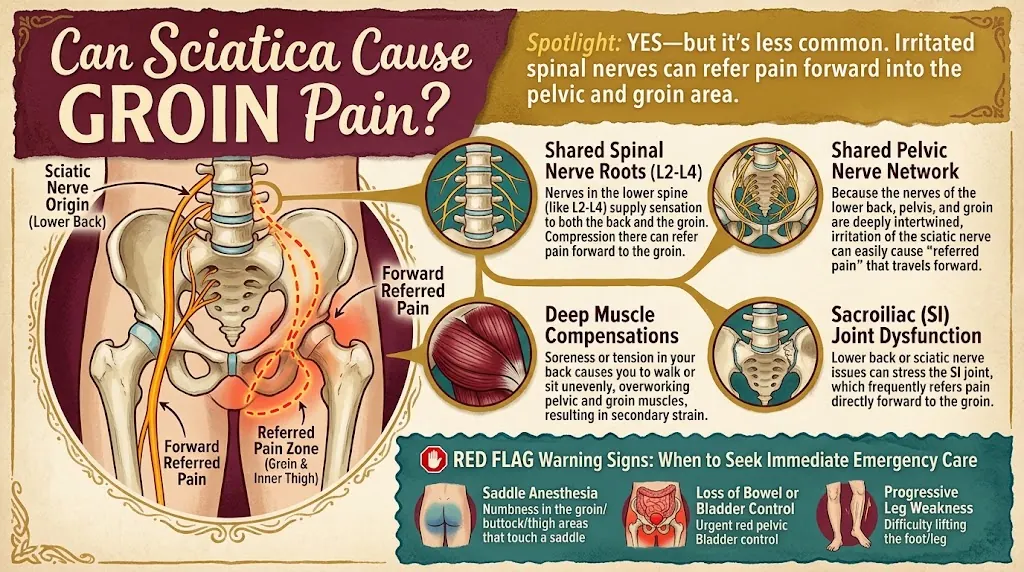
Sciatica may occur alongside groin pain, but isolated groin pain is less characteristic of sciatic nerve irritation. The two symptoms can coexist because a spinal condition may affect different nerve roots, or because the groin pain has a separate cause.
The sciatic nerve originates from nerve roots in the lower spine and travels through the buttock and down the leg. Classic sciatica commonly causes pain along this pathway, sometimes with tingling, numbness, or weakness.
Groin sensation is supplied by different nerves, including branches of the upper lumbar plexus. Irritation of certain upper lumbar nerve roots can cause pain around the groin or front of the thigh, whereas lower lumbar or sacral nerve irritation is more commonly associated with typical sciatica symptoms.
For a broader explanation of what causes sciatica and sciatic nerve pain, it helps to distinguish nerve irritation from other conditions that can produce similar discomfort.
What Does Sciatica-Related Groin Pain Feel Like?
When groin discomfort occurs alongside a spinal or nerve problem, the symptoms vary according to the affected structure. Pain may be sharp, burning, aching, or electric, and certain movements may make it more noticeable.
Possible accompanying symptoms include:
-
Lower back pain that spreads into the buttock or thigh.
-
Burning, tingling, or altered sensation in the leg.
-
Pain that changes with particular spinal movements or positions.
-
Weakness in the affected leg, depending on the nerve involved.
-
Discomfort that increases during prolonged sitting, bending, or walking.
However, groin pain alone does not establish that you have sciatica. The location of symptoms can offer clues, but a clinician may need to examine your back, hip, abdomen, and neurological function to identify the likely cause.
What Other Conditions Can Cause Groin Pain With Back Pain?
Several conditions can cause pain in both the groin and lower back. The pattern of symptoms may help guide evaluation, but these patterns are not reliable enough to diagnose the cause at home.
| Possible cause | Symptoms that may occur | Helpful distinction |
|---|---|---|
| Upper lumbar nerve irritation | Groin or front-of-thigh pain, sometimes with back pain | May involve nerves other than the sciatic nerve |
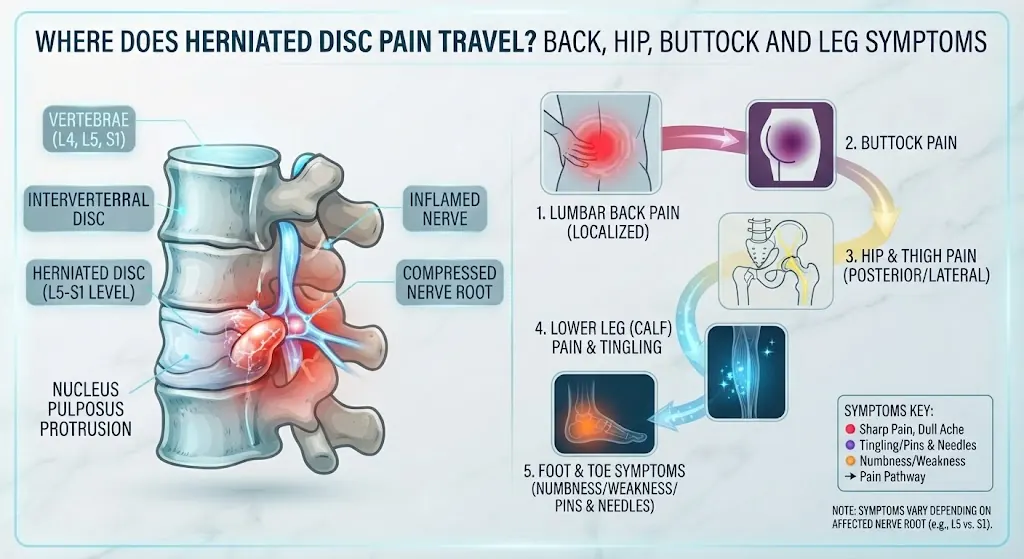
| Herniated disc | Back pain, radiating leg pain, tingling, or numbness | Symptoms depend on which nerve is affected; see what a herniated disc feels like |
| Hip joint condition | Groin pain that worsens with walking, bending, or rotating the hip | Hip movement may reproduce symptoms |
| Inguinal hernia | Groin pressure, discomfort, or a bulge | Pain may increase with coughing, lifting, or straining |
| Kidney or urinary condition | Side or back pain, sometimes with urinary symptoms | Blood in the urine, fever, or painful urination may occur |
| Pelvic conditions | Lower abdominal, pelvic, or groin discomfort | Symptoms may be associated with menstrual changes or other pelvic symptoms |
A herniated disc and sciatica are related but different: a disc problem can irritate a nerve, while sciatica describes a characteristic pattern of nerve-related pain. The distinction is explained in herniated disc versus sciatica.
Hip symptoms may also overlap with nerve pain. If discomfort spreads from your back toward the hip, how sciatica can cause hip pain provides additional context.
Other possibilities deserve attention when symptoms do not follow a typical nerve pattern. For example, lower back pain that radiates into the groin can have several explanations, including spinal, muscular, urinary, and abdominal causes. In women, fibroids and their possible connection to back pain may also be relevant when pelvic pressure or menstrual changes occur.
How Can You Tell Whether Groin Pain Is Nerve-Related?
The combination of symptoms is often more informative than the pain location alone.
| Symptom pattern | What it may suggest | What to consider |
|---|---|---|
| Back pain with buttock and leg pain | Sciatica or another nerve problem | Note whether pain travels below the knee |
| Groin pain with restricted hip movement | A hip joint problem | Notice whether turning the hip reproduces pain |
| Groin pain with a visible bulge | Possible hernia | Arrange medical evaluation |
| Back or groin pain with fever or urinary symptoms | Possible urinary or kidney condition | Seek prompt medical assessment |
| Groin numbness with bladder or bowel changes | Possible serious nerve compression | Seek emergency care |
Symptoms such as tingling in the leg from possible sciatica or leg weakness associated with nerve irritation may indicate neurological involvement. New or worsening weakness requires prompt assessment.
What Can You Do for Groin Pain With Suspected Sciatica?
If your discomfort is mild and you have no warning signs, consider these practical steps while monitoring your symptoms:
-
Modify aggravating activities. Temporarily limit heavy lifting, repeated bending, or movements that clearly increase pain.
-
Keep moving gently. Short walks and regular position changes may help you avoid stiffness, provided they do not worsen symptoms.
-
Try comfortable heat or cold. Use a wrapped heat pack or cold pack for short periods, protecting your skin.
-
Avoid forceful stretching. Do not push through sharp groin pain or movements that cause tingling or weakness.
-
Track your symptoms. Record where the pain begins, where it travels, what triggers it, and whether you notice urinary, digestive, or pelvic symptoms.
For more practical options, see what to avoid doing with sciatica and how to relieve back pain at home.
If the pain is persistent, recurrent, or difficult to explain, a clinician can assess your spine, hips, nerves, and other possible sources. Depending on the findings, you may need further testing or treatment targeted to the underlying cause.
When Should You Seek Medical Care?
Arrange a medical appointment if groin pain continues, interferes with walking, repeatedly returns, or occurs alongside persistent back pain, numbness, or unexplained symptoms. A painful groin bulge or new urinary symptoms also warrants assessment.
Seek emergency care immediately if you develop numbness around the groin or inner thighs, new loss of bladder or bowel control, difficulty urinating, or rapidly worsening leg weakness. These can be warning signs of serious nerve compression. Sudden severe testicular pain, severe abdominal pain, or groin pain accompanied by fainting also requires emergency evaluation.
For additional guidance, review when to see a doctor for lower back pain and when back pain is an emergency.
Frequently Asked Questions
1. Can sciatica cause groin pain without leg pain?
Groin pain without leg pain is not typical of classic sciatica. Other spinal nerves, hip conditions, and pelvic or abdominal problems may be responsible, so persistent symptoms deserve evaluation.
2. Can a pinched nerve in the lower back cause groin pain?
Yes. Irritation of certain upper lumbar nerve roots can cause pain in the groin or front of the thigh, depending on the nerve involved. This differs from the usual distribution of sciatic nerve pain.
3. Can groin pain from a back problem affect one side?
Yes. Spinal, nerve, or hip-related symptoms may affect one side, but one-sided pain does not establish the cause. A clinician should assess persistent or worsening symptoms.
4. How long does nerve-related groin pain last?
Duration depends on the underlying cause and its severity. Mild irritation may improve over time, but persistent pain, new neurological symptoms, or worsening discomfort should not be ignored.
5. Should I stretch if my groin hurts with sciatica?
Gentle movement may be appropriate, but stretching that reproduces groin pain or sends pain down the leg should be stopped. Seek individualized guidance if the cause of the pain is unclear.
6. Can sciatica cause numbness around the groin?
Typical sciatica does not usually cause numbness in the saddle area. New numbness around the groin or inner thighs, particularly with bladder or bowel changes, requires emergency assessment.
7. Can a hernia cause both back and groin pain?
A hernia can cause groin discomfort and may coexist with back pain, although it does not explain every case. A new painful bulge or severe pain requires prompt medical attention.
8. What doctor should I see for groin pain with lower back pain?
A primary care clinician is a reasonable starting point if symptoms are stable and there are no emergency warning signs. Depending on the examination, you may need assessment by a musculoskeletal, neurological, urological, or gynecological specialist.
Conclusion
Sciatica can occur alongside groin pain, but groin discomfort alone is not a typical sign of sciatic nerve irritation. Spinal nerves, hip conditions, hernias, and pelvic or urinary problems can produce overlapping symptoms. Monitor the location and pattern of your pain, avoid movements that worsen it, and seek medical evaluation when symptoms persist. Treat new saddle numbness, bladder or bowel changes, and rapidly worsening weakness as emergencies.
Disclaimer: This article is provided for educational and informational purposes only.